


- Afhalen na 1 uur in een winkel met voorraad
- Gratis thuislevering in België vanaf € 30
- Ruim aanbod met 7 miljoen producten
- Afhalen na 1 uur in een winkel met voorraad
- Gratis thuislevering in België vanaf € 30
- Ruim aanbod met 7 miljoen producten





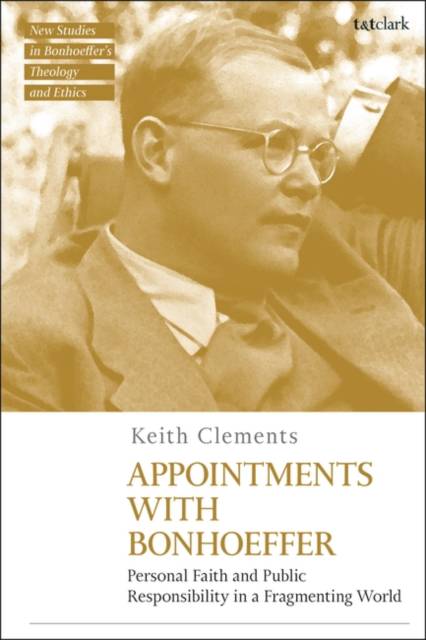
Appointments with Bonhoeffer
Personal Faith and Public Responsibility in a Fragmenting World
Keith Clements
€ 69,45
+ 138 punten
Uitvoering
Omschrijving
Keith Clements sets out how and why Dietrich Bonhoeffer, more than seventy-five years after his execution by the Nazis, still speaks cogently both to the churches and society. Beginning with the earlier reception of him as a martyr-figure and then as a provocatively original theologian, this book argues his relevance to contemporary engagement with public ethics, ecumenism, truth-telling and reconciliation, the relation between faith and democracy in a time of political extremisms, the issues of national identity signalled by Brexit, and the challenge of finding an ethical response to such challenges as the global pandemic.
Bonhoeffer's perception that living representatively on behalf of others is both the key to who God is as known in Jesus Christ, and the basis of all truly human community, provides the connecting thread running through these chapters on what it means to believe and be responsible in a fragmenting world. Clements also links this thread to the seventeenth-century spiritual writer Thomas Traherne and the Catholic Modernist Friedrich von Hügel.Specificaties
Betrokkenen
- Auteur(s):
- Uitgeverij:
Inhoud
- Aantal bladzijden:
- 218
- Taal:
- Engels
- Reeks:
Eigenschappen
- Productcode (EAN):
- 9780567707109
- Verschijningsdatum:
- 22/02/2024
- Uitvoering:
- Paperback
- Formaat:
- Trade paperback (VS)
- Afmetingen:
- 156 mm x 234 mm
- Gewicht:
- 312 g


Alleen bij Standaard Boekhandel
+ 138 punten op je klantenkaart van Standaard Boekhandel
Cadeau

AANGERADEN


Beoordelingen
We publiceren alleen reviews die voldoen aan de voorwaarden voor reviews. Bekijk onze voorwaarden voor reviews.