


- Afhalen na 1 uur in een winkel met voorraad
- Gratis thuislevering in België vanaf € 30
- Ruim aanbod met 7 miljoen producten
- Afhalen na 1 uur in een winkel met voorraad
- Gratis thuislevering in België vanaf € 30
- Ruim aanbod met 7 miljoen producten





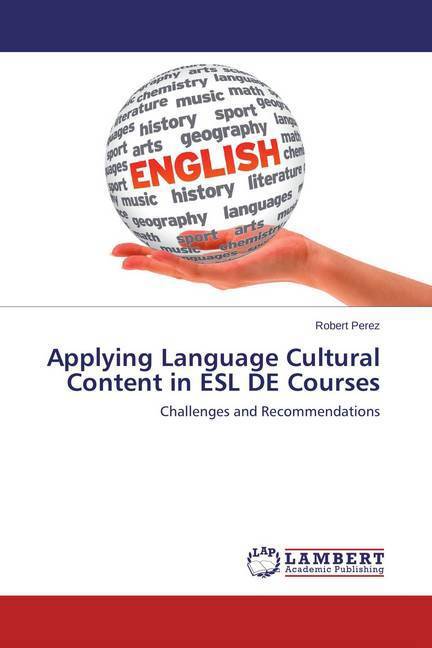
Applying Language Cultural Content in ESL DE Courses
Challenges and Recommendations
Robert Perez
Paperback | Engels
€ 61,45
+ 122 punten
Omschrijving
One of the biggest industries in language learning in Korea is English instruction to learners of non-English mother tongues, commonly known as English as a Second Language (ESL) for non-English students learning a foreign language in an English-speaking country, such as Canada, or English as a Foreign Language (EFL) for students studying English from a country where English is not the official language. This thesis pays particular interest to one area of English instruction that is continuously in high demand: ESL/EFL instruction to Korean students. However, it goes one step further by investigating how effective learning English in an online, distance education (DE) environment can be. In particular, it focuses on guidelines and recommendations into ways to make online English learning effective so that learners can be immersed in the target language and culture even though they may not be in the physical presence of an English instructor.
Specificaties
Betrokkenen
- Auteur(s):
- Uitgeverij:
Inhoud
- Aantal bladzijden:
- 156
- Taal:
- Engels
Eigenschappen
- Productcode (EAN):
- 9783659762147
- Verschijningsdatum:
- 29/07/2015
- Uitvoering:
- Paperback
- Afmetingen:
- 150 mm x 220 mm
- Gewicht:
- 236 g


Alleen bij Standaard Boekhandel
+ 122 punten op je klantenkaart van Standaard Boekhandel
Cadeau

AANGERADEN


Beoordelingen
We publiceren alleen reviews die voldoen aan de voorwaarden voor reviews. Bekijk onze voorwaarden voor reviews.