


- Afhalen na 1 uur in een winkel met voorraad
- Gratis thuislevering in België vanaf € 30
- Ruim aanbod met 7 miljoen producten
- Afhalen na 1 uur in een winkel met voorraad
- Gratis thuislevering in België vanaf € 30
- Ruim aanbod met 7 miljoen producten





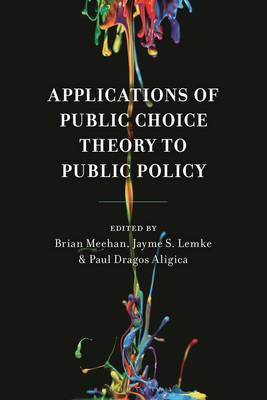
Applications of Public Choice Theory to Public Policy
€ 203,95
+ 407 punten
Eenvoudig bestellen
Veilig betalen


Gratis thuislevering vanaf € 30 (via bpost)
Gratis levering in je Standaard Boekhandel
Omschrijving
The contributors to this book utilize the Public Choice approach to interpret, analyze, and at times even predict policy outcomes from a variety of contexts around the world. Applications of Public Choice Theory to Public Policy emphasizes how much can be learned from studying real people in the process of navigating political processes and institutional change. The volume directly addresses what the Public Choice approach is, its relationship to policy analysis, and how both can be improved through the incorporation of a diversity of theoretical and empirical strategies. After establishing these strategies, Applications of Public Choice Theory to Public Policy puts this into practice to address issues such as educational reform in Ghana, policy responses to the COVID-19 pandemic, anti-trust policy, the political role of the Supreme Court in the U.S. and high courts in Latin America, the impact of taking a precautionary approach to energy policy, regulatory burdens as a form of time tax, and the looming uncertainty over how artificial intelligence will be governed as it continues to have an ever greater impact on our lives.
Specificaties
Betrokkenen
- Uitgeverij:
Inhoud
- Aantal bladzijden:
- 310
- Taal:
- Engels
- Reeks:
Eigenschappen
- Productcode (EAN):
- 9781666956351
- Verschijningsdatum:
- 30/10/2025
- Uitvoering:
- Hardcover
- Formaat:
- Genaaid
- Afmetingen:
- 152 mm x 229 mm
- Gewicht:
- 585 g


Alleen bij Standaard Boekhandel
+ 407 punten op je klantenkaart van Standaard Boekhandel
CADEAU

AANGERADEN


Beoordelingen
We publiceren alleen reviews die voldoen aan de voorwaarden voor reviews. Bekijk onze voorwaarden voor reviews.