


- Afhalen na 1 uur in een winkel met voorraad
- Gratis thuislevering in België vanaf € 30
- Ruim aanbod met 7 miljoen producten
- Afhalen na 1 uur in een winkel met voorraad
- Gratis thuislevering in België vanaf € 30
- Ruim aanbod met 7 miljoen producten





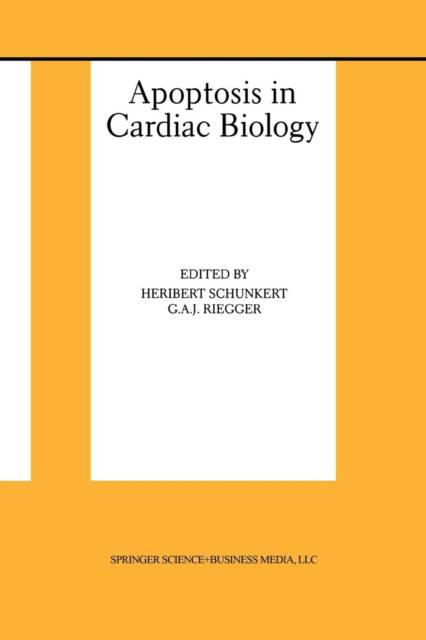
Apoptosis in Cardiac Biology
€ 181,95
+ 363 punten
Omschrijving
Apoptosis or programmed cell death is increasingly considered to be a major factor in the development and progression of cardiovascular disease. In patients with heart failure the activation of apoptosis may result in the loss of irreplaceable cardiac myocytes promoting the clinical course of the syndrome. Moreover, in the coronary arteries inflammation and apoptosis may weaken critical structures of the vessel wall leading to plaque rupture and, subsequently, to myocardial infarction. Given these deleterious consequences, it seems almost paradoxical that programmed cell death is an active process that, if initiated under physiological circumstances, is essential for both coordinated tissue growth or destruction of malignant cells.
Apoptosis in Cardiac Biology, written by a team of internationally renowned researchers, gives a timely synopsis of basic mechanisms, cellular and structural targets and, finally, clinical implications of programmed cell death in the heart. The expert authors of this volume give concise overviews on general and cell-specific aspects of programmed cell death in cardiac myocytes and fibroblasts, as well as in vascular smooth muscle and endothelial cells. Furthermore, novel therapeutic options arising from the outstanding pathophysiological significance of cardiac apoptosis are presented.
This comprehensive review of Apoptosis in Cardiac Biology will be of interest to both clinicians and basic researchers who are active in the fields of cardiology and atherosclerosis.
Apoptosis in Cardiac Biology, written by a team of internationally renowned researchers, gives a timely synopsis of basic mechanisms, cellular and structural targets and, finally, clinical implications of programmed cell death in the heart. The expert authors of this volume give concise overviews on general and cell-specific aspects of programmed cell death in cardiac myocytes and fibroblasts, as well as in vascular smooth muscle and endothelial cells. Furthermore, novel therapeutic options arising from the outstanding pathophysiological significance of cardiac apoptosis are presented.
This comprehensive review of Apoptosis in Cardiac Biology will be of interest to both clinicians and basic researchers who are active in the fields of cardiology and atherosclerosis.
Specificaties
Betrokkenen
- Uitgeverij:
Inhoud
- Aantal bladzijden:
- 354
- Taal:
- Engels
- Reeks:
- Reeksnummer:
- nr. 5
Eigenschappen
- Productcode (EAN):
- 9781475782622
- Verschijningsdatum:
- 24/03/2013
- Uitvoering:
- Paperback
- Formaat:
- Trade paperback (VS)
- Afmetingen:
- 156 mm x 234 mm
- Gewicht:
- 521 g

Alleen bij Standaard Boekhandel
+ 363 punten op je klantenkaart van Standaard Boekhandel
Cadeau

AANGERADEN


Beoordelingen
We publiceren alleen reviews die voldoen aan de voorwaarden voor reviews. Bekijk onze voorwaarden voor reviews.