


- Afhalen na 1 uur in een winkel met voorraad
- Gratis thuislevering in België vanaf € 30
- Ruim aanbod met 7 miljoen producten
- Afhalen na 1 uur in een winkel met voorraad
- Gratis thuislevering in België vanaf € 30
- Ruim aanbod met 7 miljoen producten





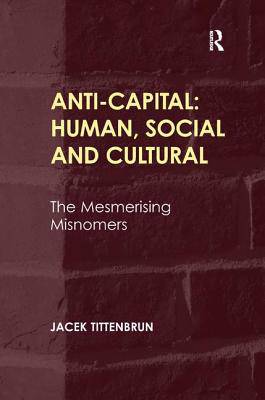
Anti-Capital: Human, Social and Cultural
The Mesmerising Misnomers
Jacek Tittenbrun
Hardcover | Engels
€ 343,45
+ 686 punten
Omschrijving
Offering an in-depth, critical analysis of the concepts of human and social capital, as well as their surrounding theories, Anti-Capital: Human, Social and Cultural proposes an alternative theoretical framework, whilst better explaining the realities that they mask in economic terms. A rigorous exploration of the most popular forms of 'capital' in the contemporary social sciences, this book will be of interest to scholars and students of sociology, political and social theory, demography and economics.
Specificaties
Betrokkenen
- Auteur(s):
- Uitgeverij:
Inhoud
- Aantal bladzijden:
- 336
- Taal:
- Engels
Eigenschappen
- Productcode (EAN):
- 9781409452553
- Verschijningsdatum:
- 28/05/2013
- Uitvoering:
- Hardcover
- Formaat:
- Genaaid
- Afmetingen:
- 156 mm x 234 mm
- Gewicht:
- 648 g


Alleen bij Standaard Boekhandel
+ 686 punten op je klantenkaart van Standaard Boekhandel
Cadeau

AANGERADEN


Beoordelingen
We publiceren alleen reviews die voldoen aan de voorwaarden voor reviews. Bekijk onze voorwaarden voor reviews.