



Je cadeautjes zeker op tijd in huis hebben voor de feestdagen? Kom langs in onze winkels en vind het perfecte geschenk!
- Afhalen na 1 uur in een winkel met voorraad
- Gratis thuislevering in België vanaf € 30
- Ruim aanbod met 7 miljoen producten
Je cadeautjes zeker op tijd in huis hebben voor de feestdagen? Kom langs in onze winkels en vind het perfecte geschenk!
- Afhalen na 1 uur in een winkel met voorraad
- Gratis thuislevering in België vanaf € 30
- Ruim aanbod met 7 miljoen producten





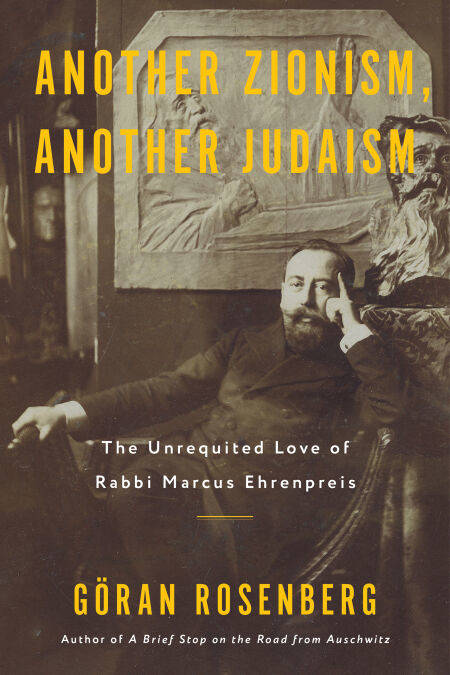
Another Zionism, Another Judaism E-BOOK
The Unrequrited Love of Rabbi Marcus Ehrenpreis
Göran Rosenberg
E-book | Engels
€ 15,76
+ 15 punten
Uitvoering
Omschrijving
A timely, deeply personal biography of a Jewish leader whose questions for Israel have come back to haunt us with a vengeance.
Born in what is now Lviv, Ukraine, in 1869, Marcus Ehrenpreis was the secretary of Theodor Herzl at the First Zionist Congress in Basel in 1897, a grand rabbi of Bulgaria during two Balkan wars, a diplomat in defense of Europe’s minorities, a Swedish author compared to Joseph Conrad, the chief rabbi of one of Europe’s few unscathed Jewish communities through the Nazi era. More than a biography of a man's life and work, this book is a literary journey by award-winning Swedish Jewish writer and public intellectual Göran Rosenberg (A Brief Stop on the Road from Auschwitz), in search of that European Jewish world of meaning and hope that Ehrenpreis so clearly embodied, so vividly articulated, and so relentlessly worked to explain, defend, and salvage from his pulpit in Stockholm. His lifelong dream was to build a bridge between “Israel” and “the peoples,” and he believed that he could do so by bringing a spiritually and culturally revitalized Judaism into a new and self-asserted contact with the non-Jewish world. His Zionism was not about making Jews a nation like all others, in a nation-state like all others, but creating a spiritual and cultural center for the renaissance of Jewish life “amidst the nations.” Even as Jewish life in Europe was all but annihilated, he feared what Jewish nationalism might do to the spiritual heritage of Judaism.
A meticulously researched and beautifully written story of boundless hope, unrequited love, and annihilated possibilities, Another Zionism, Another Judaism evokes a diasporic Jewish existence that would be harshly judged in the aftermath of the Holocaust and the creation of the State of Israel. It also reminds us of a Zionism that strived for something other than an ethnic-national fortress on a narrow strip of land in the Middle East.
Born in what is now Lviv, Ukraine, in 1869, Marcus Ehrenpreis was the secretary of Theodor Herzl at the First Zionist Congress in Basel in 1897, a grand rabbi of Bulgaria during two Balkan wars, a diplomat in defense of Europe’s minorities, a Swedish author compared to Joseph Conrad, the chief rabbi of one of Europe’s few unscathed Jewish communities through the Nazi era. More than a biography of a man's life and work, this book is a literary journey by award-winning Swedish Jewish writer and public intellectual Göran Rosenberg (A Brief Stop on the Road from Auschwitz), in search of that European Jewish world of meaning and hope that Ehrenpreis so clearly embodied, so vividly articulated, and so relentlessly worked to explain, defend, and salvage from his pulpit in Stockholm. His lifelong dream was to build a bridge between “Israel” and “the peoples,” and he believed that he could do so by bringing a spiritually and culturally revitalized Judaism into a new and self-asserted contact with the non-Jewish world. His Zionism was not about making Jews a nation like all others, in a nation-state like all others, but creating a spiritual and cultural center for the renaissance of Jewish life “amidst the nations.” Even as Jewish life in Europe was all but annihilated, he feared what Jewish nationalism might do to the spiritual heritage of Judaism.
A meticulously researched and beautifully written story of boundless hope, unrequited love, and annihilated possibilities, Another Zionism, Another Judaism evokes a diasporic Jewish existence that would be harshly judged in the aftermath of the Holocaust and the creation of the State of Israel. It also reminds us of a Zionism that strived for something other than an ethnic-national fortress on a narrow strip of land in the Middle East.
Specificaties
Betrokkenen
- Auteur(s):
- Uitgeverij:
Inhoud
- Aantal bladzijden:
- 432
- Taal:
- Engels
Eigenschappen
- Productcode (EAN):
- 9781635423556
- Verschijningsdatum:
- 3/02/2025
- Uitvoering:
- E-book
- Beveiligd met:
- Adobe DRM
- Formaat:
- ePub


Alleen bij Standaard Boekhandel
+ 15 punten op je klantenkaart van Standaard Boekhandel
CADEAU


Beoordelingen
We publiceren alleen reviews die voldoen aan de voorwaarden voor reviews. Bekijk onze voorwaarden voor reviews.