



Je cadeautjes zeker op tijd in huis hebben voor de feestdagen? Kom langs in onze winkels en vind het perfecte geschenk!
- Afhalen na 1 uur in een winkel met voorraad
- Gratis thuislevering in België vanaf € 30
- Ruim aanbod met 7 miljoen producten
Je cadeautjes zeker op tijd in huis hebben voor de feestdagen? Kom langs in onze winkels en vind het perfecte geschenk!
- Afhalen na 1 uur in een winkel met voorraad
- Gratis thuislevering in België vanaf € 30
- Ruim aanbod met 7 miljoen producten





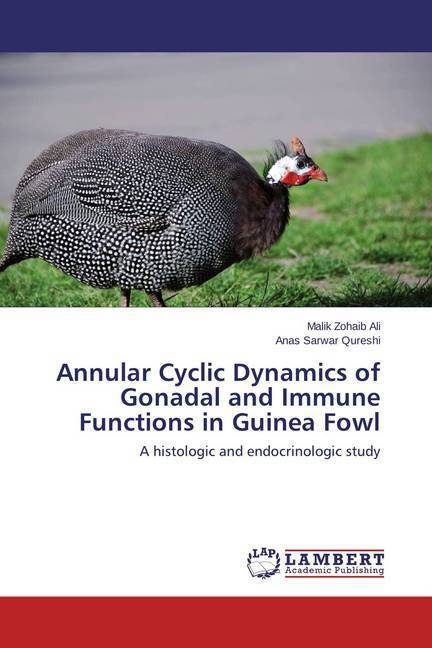
Annular Cyclic Dynamics of Gonadal and Immune Functions in Guinea Fowl
A histologic and endocrinologic study
Malik Zohaib Ali, Anas Sarwar Qureshi
Paperback | Engels
€ 38,95
+ 77 punten
Omschrijving
Rural poultry production plays essential role in bridging the protein deficiency prevailing in the world. Guinea fowl has a significant role in rural poultry raised under extensive production system that permits farmers to bring in cash mainly for eggs and meat. It is domesticated across the world. It is sexually dimorphic and its male can be distinguished by large helmet and wattles. Its meat is lean and tender having 50% less fat and 8% more protein than chicken meat. It is a long day breeder and its seasonal reproductive cycle has an inverse relation with the immune system. During the annual cycle, there are marked variations in the mass of bursa of Fabricius and testes. Bursa was maximum during winter season (Jan-Feb) and minimal during summer season (May-Jun). This represents an inverse relationship with testicular cycle and other ecological factors like humidity, rainfall, and temperature and food availability. It is evident that the gonadal steroids are responsible for immune regulation. Seasonal variation in the immune system of fowl could result from annual rhythm of sex steroids.
Specificaties
Betrokkenen
- Auteur(s):
- Uitgeverij:
Inhoud
- Aantal bladzijden:
- 88
- Taal:
- Engels
Eigenschappen
- Productcode (EAN):
- 9783659720246
- Verschijningsdatum:
- 15/06/2015
- Uitvoering:
- Paperback
- Afmetingen:
- 150 mm x 220 mm
- Gewicht:
- 141 g


Alleen bij Standaard Boekhandel
+ 77 punten op je klantenkaart van Standaard Boekhandel
CADEAU


Beoordelingen
We publiceren alleen reviews die voldoen aan de voorwaarden voor reviews. Bekijk onze voorwaarden voor reviews.