



Je cadeautjes zeker op tijd in huis hebben voor de feestdagen? Kom langs in onze winkels en vind het perfecte geschenk!
- Afhalen na 1 uur in een winkel met voorraad
- Gratis thuislevering in België vanaf € 30
- Ruim aanbod met 7 miljoen producten
Je cadeautjes zeker op tijd in huis hebben voor de feestdagen? Kom langs in onze winkels en vind het perfecte geschenk!
- Afhalen na 1 uur in een winkel met voorraad
- Gratis thuislevering in België vanaf € 30
- Ruim aanbod met 7 miljoen producten





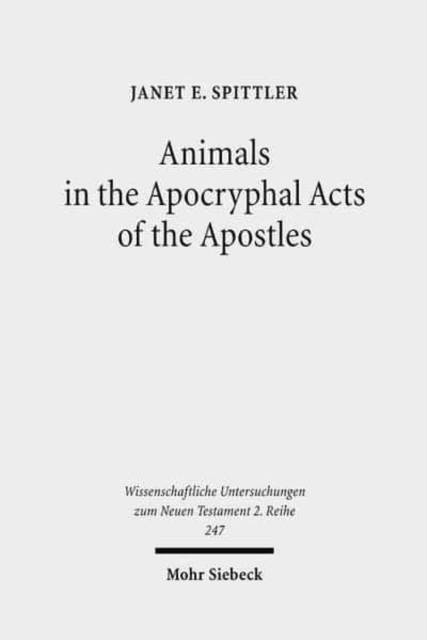
Animals in the Apocryphal Acts of the Apostles
The Wild Kingdom of Early Christian Literature
Janet E Spittler
€ 114,95
+ 229 punten
Omschrijving
Animals play prominent, often peculiar, roles in the highly entertaining five major apocryphal acts of the apostles, the Acts of Andrew, Acts of John, Acts of Peter, Acts of Paul and Acts of Thomas . Lions, bears, dogs, bedbugs, asses and even seals appear in these narratives - some friendly, some vicious, some with the capacity for human speech. Janet E. Spittler argues that these animal episodes have a greater, more complex significance than has previously been recognized, reading these texts within the broad context of Greco-Roman literature and presenting new interpretations of each animal-related episode. The natural characteristics of these animals - known to ancient authors and audiences through natural historical compendia, historiography and biography, current philosophical debates, fables, and novelistic literature - are intentionally and cleverly evoked by the authors of the apocryphal acts, often serving to underscore key themes of the works. Janet E. Spittler contends that the often very positive presentation of animals in these texts offers a counterbalance to the often negative depiction of animals in other early Christian literature, thus her book has broad implications for contemporary understandings of early Christian attitudes towards animals and the natural world.
Specificaties
Betrokkenen
- Auteur(s):
- Uitgeverij:
Inhoud
- Aantal bladzijden:
- 264
- Taal:
- Engels
- Reeks:
Eigenschappen
- Productcode (EAN):
- 9783161497315
- Verschijningsdatum:
- 31/12/2008
- Uitvoering:
- Paperback
- Formaat:
- Trade paperback (VS)
- Afmetingen:
- 153 mm x 229 mm
- Gewicht:
- 426 g


Alleen bij Standaard Boekhandel
+ 229 punten op je klantenkaart van Standaard Boekhandel
CADEAU


Beoordelingen
We publiceren alleen reviews die voldoen aan de voorwaarden voor reviews. Bekijk onze voorwaarden voor reviews.