


- Afhalen na 1 uur in een winkel met voorraad
- Gratis thuislevering in België vanaf € 30
- Ruim aanbod met 7 miljoen producten
- Afhalen na 1 uur in een winkel met voorraad
- Gratis thuislevering in België vanaf € 30
- Ruim aanbod met 7 miljoen producten





€ 69,95
+ 139 punten
Omschrijving
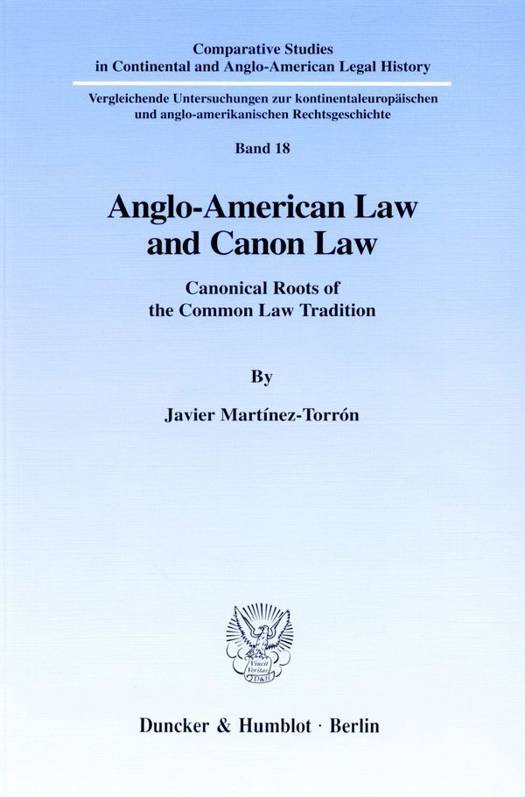
In the book at issue, the author endeavors to demonstrate a fact that has often been neglected by many Anglo-American legal historians: the Anglo-American legal tradition has more elements in common with Continental law than is frequently believed (Continent = European; continental law and doctrine: see also "ius commune, ius utrumque"). The "insularity" of English law has never been complete. The learned laws, and particularly the canon law, have also played a very significant role in the historical evolution of English law. The formative process of the common law tradition shows numerous points of confluence with the civil law (civil law, civilians: see also Continent) tradition, namely those relating to their common elements of Christian-canonical origin.
For this very reason, the Anglo-American and the Continental legal traditions can be considered as the two components - the two sides - of one and the same legal culture, which embraces the entire Western world. It is probably also the reason why they can communicate with each other: they share an important "juridical vocabulary", an ensemble of common legal concepts.
For this very reason, the Anglo-American and the Continental legal traditions can be considered as the two components - the two sides - of one and the same legal culture, which embraces the entire Western world. It is probably also the reason why they can communicate with each other: they share an important "juridical vocabulary", an ensemble of common legal concepts.
Specificaties
Betrokkenen
- Auteur(s):
- Uitgeverij:
Inhoud
- Aantal bladzijden:
- 207
- Taal:
- Engels
- Reeks:
- Reeksnummer:
- nr. 18
Eigenschappen
- Productcode (EAN):
- 9783428094141
- Verschijningsdatum:
- 14/08/1998
- Uitvoering:
- Paperback
- Formaat:
- Trade paperback (VS)
- Afmetingen:
- 156 mm x 232 mm
- Gewicht:
- 2898 g


Alleen bij Standaard Boekhandel
+ 139 punten op je klantenkaart van Standaard Boekhandel
Cadeau

AANGERADEN


Beoordelingen
We publiceren alleen reviews die voldoen aan de voorwaarden voor reviews. Bekijk onze voorwaarden voor reviews.