



Je cadeautjes zeker op tijd in huis hebben voor de feestdagen? Kom langs in onze winkels en vind het perfecte geschenk!
- Afhalen na 1 uur in een winkel met voorraad
- Gratis thuislevering in België vanaf € 30
- Ruim aanbod met 7 miljoen producten
Je cadeautjes zeker op tijd in huis hebben voor de feestdagen? Kom langs in onze winkels en vind het perfecte geschenk!
- Afhalen na 1 uur in een winkel met voorraad
- Gratis thuislevering in België vanaf € 30
- Ruim aanbod met 7 miljoen producten





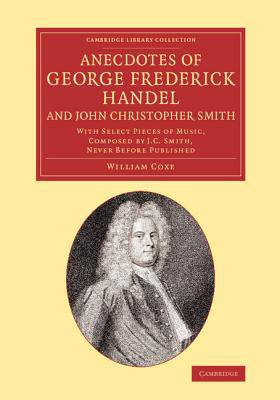
Anecdotes of George Frederick Handel, and John Christopher Smith
With Select Pieces of Music, Composed by J. C. Smith, Never Before Published
William Coxe
€ 64,45
+ 128 punten
Omschrijving
The author and clergyman William Coxe (1748-1828), noted for his travel works, was the stepson of Handel's amanuensis, German-born John Christopher Smith (1712-95). First published in 1799, the present work is a valuable source of first-hand information about two men at the heart of eighteenth-century English music: George Frideric Handel (1685-1759), whose inventive and sensitive melodic genius and exuberant brilliance in depicting the spectacular are best displayed in his Messiah and Zadok the Priest, and Smith, a composer of attractive and fashionable music, who settled in London in 1720, took lessons with Handel and later supported the great composer as his eyesight failed. Smith was also organist at the Foundling Hospital until 1770. This publication, profits from which were intended to support Smith's family, draws on the works of John Hawkins and Charles Burney, and on anecdotes claimed to be 'derived from unquestionable authority'.
Specificaties
Betrokkenen
- Auteur(s):
- Uitgeverij:
Inhoud
- Aantal bladzijden:
- 116
- Taal:
- Engels
- Reeks:
Eigenschappen
- Productcode (EAN):
- 9781108070942
- Verschijningsdatum:
- 13/02/2014
- Uitvoering:
- Paperback
- Formaat:
- Trade paperback (VS)
- Afmetingen:
- 178 mm x 254 mm
- Gewicht:
- 213 g


Alleen bij Standaard Boekhandel
+ 128 punten op je klantenkaart van Standaard Boekhandel
CADEAU


Beoordelingen
We publiceren alleen reviews die voldoen aan de voorwaarden voor reviews. Bekijk onze voorwaarden voor reviews.