


- Afhalen na 1 uur in een winkel met voorraad
- Gratis thuislevering in België vanaf € 30
- Ruim aanbod met 7 miljoen producten
- Afhalen na 1 uur in een winkel met voorraad
- Gratis thuislevering in België vanaf € 30
- Ruim aanbod met 7 miljoen producten





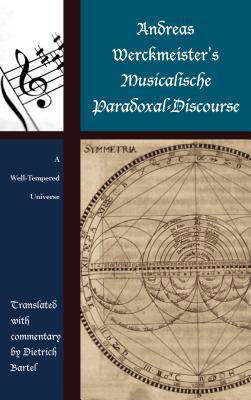
Andreas Werckmeister's Musicalische Paradoxal-Discourse
A Well-Tempered Universe
€ 195,45
+ 390 punten
Omschrijving
Andreas Werckmeister (1645 - 1706), a late seventeenth-century German Lutheran organist, composer, and music theorist, is the last great advocate and defender of the Great Tradition in music, with its assumptions that music is a divine gift to humanity, spiritually charged yet rationally accessible, the key being a complex of mathematical proportions which govern and are at the root of the entire universe and all which that embraces. Thus understood, music is the audible manifestation of the order of the universe, allowing glimpses, sound-bites of the very Creator of a well-tempered universe, and of our relationship to each other, our environment, and the divine powers which placed us here. This is the subject matter of the conversation which Werckmeister wishes to have with us, his readers, particularly in his last treatise, the Musicalische Paradoxal-Discourse. But he does not make it easy for today's readers. He assumes certain proficiencies from his readers, including detailed biblical knowledge, a fluency in Latin, and a familiarity with treatises and publications concerning music, theology, and a number of related disciplines. He writes in a rather archaic German, riddled with obscure references which require a thorough explanation. With its extensive commentary and translation of the treatise, this book seeks to bridge Werckmeister's world with that of the twenty-first century. Werckmeister wrote for novice and professional musicians alike, an author who wanted to consider with his readers the basic and existential questions and issues regarding the wondrous art of music, questions as relevant then as they are now.
Specificaties
Betrokkenen
- Vertaler(s):
- Uitgeverij:
Inhoud
- Aantal bladzijden:
- 174
- Taal:
- Engels
- Reeks:
Eigenschappen
- Productcode (EAN):
- 9781498566346
- Verschijningsdatum:
- 30/11/2017
- Uitvoering:
- Hardcover
- Formaat:
- Genaaid
- Afmetingen:
- 160 mm x 231 mm
- Gewicht:
- 544 g

Alleen bij Standaard Boekhandel
+ 390 punten op je klantenkaart van Standaard Boekhandel
Cadeau

AANGERADEN


Beoordelingen
We publiceren alleen reviews die voldoen aan de voorwaarden voor reviews. Bekijk onze voorwaarden voor reviews.