


- Afhalen na 1 uur in een winkel met voorraad
- Gratis thuislevering in België vanaf € 30
- Ruim aanbod met 7 miljoen producten
- Afhalen na 1 uur in een winkel met voorraad
- Gratis thuislevering in België vanaf € 30
- Ruim aanbod met 7 miljoen producten





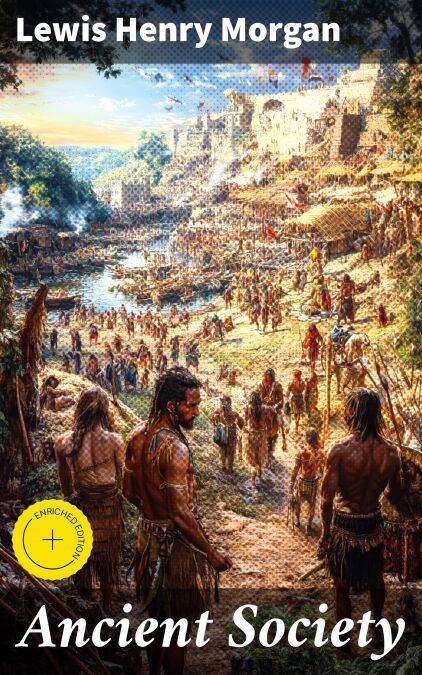
Ancient Society E-BOOK
Enriched edition. Or, Researches in the Lines of Human Progress from Savagery, through Barbarism to Civilization
Lewis Henry Morgan
E-book | Engels
€ 1,99
+ 1 punten
Uitvoering
Eenvoudig bestellen
Veilig betalen


Onmiddellijk geleverd via e-mail
Omschrijving
In "Ancient Society," Lewis Henry Morgan presents a groundbreaking analysis of human social evolution, articulating a comprehensive framework that categorizes societies into three primary stages: savagery, barbarism, and civilization. Drawing from anthropological insights and cross-cultural comparisons, Morgan employs a rigorous yet accessible literary style to explore the intricacies of social organization, kinship systems, and the development of property. The book critiques prevailing notions of civilization and sheds light on the egalitarian structures inherent in indigenous societies, situating Morgan's work within the broader context of 19th-century social science and its evolution. Lewis Henry Morgan (1818-1881) was an influential American anthropologist and social theorist, whose experiences among the Iroquois and his extensive fieldwork profoundly shaped his understanding of kinship and social structures. His commitment to indigenous rights and his advocacy for the recognition of complex social systems in non-Western societies framed his arguments in "Ancient Society." Morgan's interdisciplinary scholarship, collaborating with figures like Karl Marx and Friedrich Engels, positioned him as a pivotal figure in the development of modern anthropology, influencing both academic discourse and public perceptions of indigenous peoples. "Ancient Society" is an essential read for students of anthropology, sociology, and history, as it not only challenges ethnocentric views of progress but also invites readers to reconsider the foundations of human social organization. Morgan's eloquent prose and compelling arguments offer a reflective exploration of cultural development that remains relevant today, making it a vital contribution to the understanding of humanity's diverse social tapestry.
In this enriched edition, we have carefully created added value for your reading experience:
- A succinct Introduction situates the work's timeless appeal and themes.
- The Synopsis outlines the central plot, highlighting key developments without spoiling critical twists.
- A detailed Historical Context immerses you in the era's events and influences that shaped the writing.
- A thorough Analysis dissects symbols, motifs, and character arcs to unearth underlying meanings.
- Reflection questions prompt you to engage personally with the work's messages, connecting them to modern life.
- Hand‐picked Memorable Quotes shine a spotlight on moments of literary brilliance.
- Interactive footnotes clarify unusual references, historical allusions, and archaic phrases for an effortless, more informed read.
In this enriched edition, we have carefully created added value for your reading experience:
- A succinct Introduction situates the work's timeless appeal and themes.
- The Synopsis outlines the central plot, highlighting key developments without spoiling critical twists.
- A detailed Historical Context immerses you in the era's events and influences that shaped the writing.
- A thorough Analysis dissects symbols, motifs, and character arcs to unearth underlying meanings.
- Reflection questions prompt you to engage personally with the work's messages, connecting them to modern life.
- Hand‐picked Memorable Quotes shine a spotlight on moments of literary brilliance.
- Interactive footnotes clarify unusual references, historical allusions, and archaic phrases for an effortless, more informed read.
Specificaties
Betrokkenen
- Auteur(s):
- Uitgeverij:
Inhoud
- Aantal bladzijden:
- 539
- Taal:
- Engels
Eigenschappen
- Productcode (EAN):
- 4057664649928
- Verschijningsdatum:
- 20/11/2019
- Uitvoering:
- E-book
- Beveiligd met:
- Digital watermarking
- Formaat:
- ePub


Alleen bij Standaard Boekhandel
+ 1 punten op je klantenkaart van Standaard Boekhandel
CADEAU

AANGERADEN


Beoordelingen
We publiceren alleen reviews die voldoen aan de voorwaarden voor reviews. Bekijk onze voorwaarden voor reviews.