



- Afhalen na 1 uur in een winkel met voorraad
- In januari gratis thuislevering in België
- Ruim aanbod met 7 miljoen producten
- Afhalen na 1 uur in een winkel met voorraad
- In januari gratis thuislevering in België
- Ruim aanbod met 7 miljoen producten





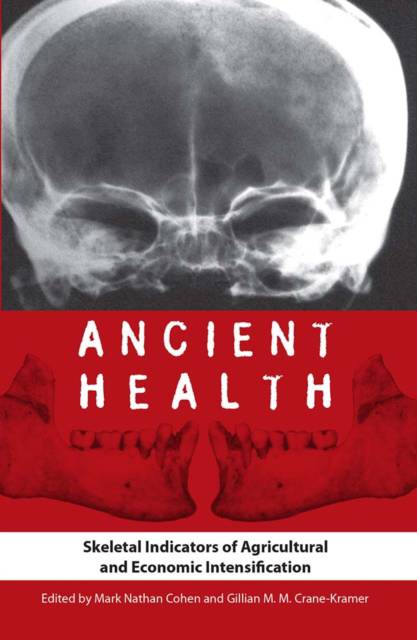
Ancient Health
Skeletal Indicators of Agricultural and Economic Intensification
€ 54,95
+ 109 punten
Omschrijving
"Pulls together a global sampling of excellent research on a topic of great interest to scholars of prehistory that otherwise would be difficult to assemble or in some cases to even access."--Patricia M. Lambert, Utah State University Twenty years ago Mark Nathan Cohen coedited a collection of essays that set a new standard in using paleopathology to identify trends in health associated with changes in prehistoric technology, economy, demography, and political centralization. Ancient Health expands and celebrates that work. Confirming earlier conclusions that human health declined after the adoption of farming and the rise of civilization, this book greatly enlarges the geographical range of paleopathological studies by including new work from both established and up-and-coming scholars. Moving beyond the western hemisphere and western Eurasia, this collection involves studies from Chile, Peru, Mexico, the United States, Denmark, Britain, Portugal, South Africa, Israel, India, Vietnam, Thailand, China, and Mongolia. Adding great significance to this volume, the author discusses and successfully rebuts the arguments of the "osteological paradox" that long have challenged work in the area of quantitative paleopathology, demonstrating that the "paradox" has far less meaning than its proponents argue. Mark Nathan Cohen is University Distinguished Teaching Professor of Anthropology at the State University of New York, Plattsburgh. Gillian M. M. Crane-Kramer is visiting assistant professor of anthropology at the State University of New York, Plattsburgh.
Specificaties
Betrokkenen
- Uitgeverij:
Inhoud
- Aantal bladzijden:
- 464
- Taal:
- Engels
- Reeks:
Eigenschappen
- Productcode (EAN):
- 9780813044033
- Verschijningsdatum:
- 15/04/2012
- Uitvoering:
- Paperback
- Formaat:
- Trade paperback (VS)
- Afmetingen:
- 156 mm x 234 mm
- Gewicht:
- 639 g


Alleen bij Standaard Boekhandel
+ 109 punten op je klantenkaart van Standaard Boekhandel
Cadeau

AANGERADEN


Beoordelingen
We publiceren alleen reviews die voldoen aan de voorwaarden voor reviews. Bekijk onze voorwaarden voor reviews.