


- Afhalen na 1 uur in een winkel met voorraad
- Gratis thuislevering in België vanaf € 30
- Ruim aanbod met 7 miljoen producten
- Afhalen na 1 uur in een winkel met voorraad
- Gratis thuislevering in België vanaf € 30
- Ruim aanbod met 7 miljoen producten





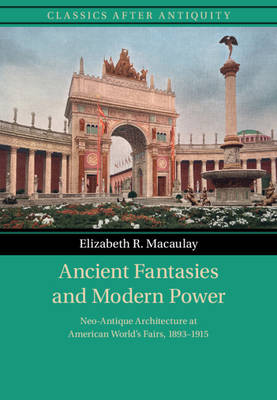
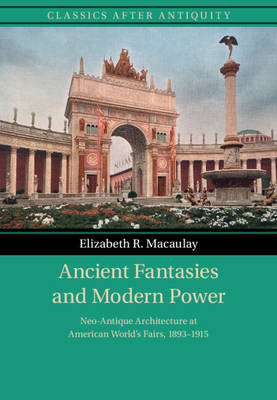
Ancient Fantasies and Modern Power
Neo-Antique Architecture at American World's Fairs, 1893-1915
Elizabeth R Macaulay
€ 51,45
+ 102 punten
Uitvoering
Omschrijving
Chicago's Columbian Exposition of 1893 celebrated the quadricentennial of Columbus's 'discovery" of the Americas by creating a fantastical white city composed of Roman triumphal arches and domes, Corinthian colonnades, and Egyptian obelisks. World's fairs were among the most important cultural, socio-economic, and political phenomena of the nineteenth and twentieth centuries: millions visited hoping to understand the modernity and progress of these cities and the nascent superpower of the United States. But what they found was often a representation of the past. From 1893 to 1915, ancient Greco-Roman and Egyptian architecture was deployed to create immersive environments at Chicago, Nashville, Omaha, St. Louis, and San Francisco. The seemingly endless adaptations of ancient architecture at these five fairs demonstrated that ancient architecture can symbolize and transmit the complex-and often paradoxical or contradictory-ideas that defined the United States at the turn of the twentieth century and still endure today.
Specificaties
Betrokkenen
- Auteur(s):
- Uitgeverij:
Inhoud
- Aantal bladzijden:
- 406
- Taal:
- Engels
- Reeks:
Eigenschappen
- Productcode (EAN):
- 9781009407106
- Verschijningsdatum:
- 19/03/2026
- Uitvoering:
- Paperback
- Formaat:
- Trade paperback (VS)
- Afmetingen:
- 172 mm x 245 mm
- Gewicht:
- 789 g


Alleen bij Standaard Boekhandel
+ 102 punten op je klantenkaart van Standaard Boekhandel
Cadeau

AANGERADEN


Beoordelingen
We publiceren alleen reviews die voldoen aan de voorwaarden voor reviews. Bekijk onze voorwaarden voor reviews.