



Bedankt voor het vertrouwen het afgelopen jaar! Om jou te bedanken bieden we GRATIS verzending (in België) aan op alles gedurende de hele maand januari.
- Afhalen na 1 uur in een winkel met voorraad
- In januari gratis thuislevering in België
- Ruim aanbod met 7 miljoen producten
Bedankt voor het vertrouwen het afgelopen jaar! Om jou te bedanken bieden we GRATIS verzending (in België) aan op alles gedurende de hele maand januari.
- Afhalen na 1 uur in een winkel met voorraad
- In januari gratis thuislevering in België
- Ruim aanbod met 7 miljoen producten





Omschrijving
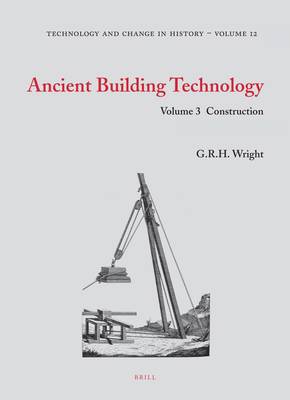
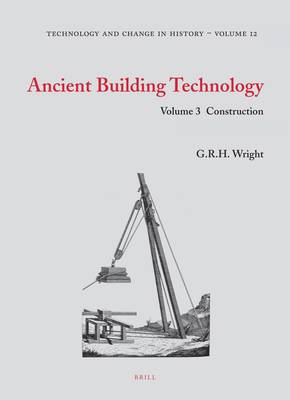
Building construction is the subject of this third part of the Ancient Building Technology set (TCH 4 and TCH 7 dealing with the history of building and building materials). Beginning with the formulation of a project (drawings, specifications and estimates of quantities) it goes on to discuss preliminary site surveying and setting out, followed by building site development and its attendant installations, and then examines the disposition of the various building materials (wood, stone, brick, and concrete) in building construction from pre-history to the end of antiquity.
The work is intended as a ready reference compendium of information which otherwise would require extended research to come by. It should be of service to all students of antiquity, and a particular convenience to have on hand during archaeological field work. This volume is published in two parts, the first containing the discussion and the second more than 400 illustrations, completing the discussion.
The work is intended as a ready reference compendium of information which otherwise would require extended research to come by. It should be of service to all students of antiquity, and a particular convenience to have on hand during archaeological field work. This volume is published in two parts, the first containing the discussion and the second more than 400 illustrations, completing the discussion.
Specificaties
Betrokkenen
- Auteur(s):
- Uitgeverij:
Inhoud
- Aantal bladzijden:
- 604
- Taal:
- Engels
- Reeks:
- Reeksnummer:
- nr. 12
Eigenschappen
- Productcode (EAN):
- 9789004177451
- Verschijningsdatum:
- 23/11/2009
- Formaat:
- Genaaid
- Afmetingen:
- 216 mm x 297 mm
- Gewicht:
- 2358 g


Alleen bij Standaard Boekhandel
+ 1028 punten op je klantenkaart van Standaard Boekhandel
SOLDEN


Beoordelingen
We publiceren alleen reviews die voldoen aan de voorwaarden voor reviews. Bekijk onze voorwaarden voor reviews.