



Bedankt voor het vertrouwen het afgelopen jaar! Om jou te bedanken bieden we GRATIS verzending (in België) aan op alles gedurende de hele maand januari.
- Afhalen na 1 uur in een winkel met voorraad
- In januari gratis thuislevering in België
- Ruim aanbod met 7 miljoen producten
Bedankt voor het vertrouwen het afgelopen jaar! Om jou te bedanken bieden we GRATIS verzending (in België) aan op alles gedurende de hele maand januari.
- Afhalen na 1 uur in een winkel met voorraad
- In januari gratis thuislevering in België
- Ruim aanbod met 7 miljoen producten





Omschrijving
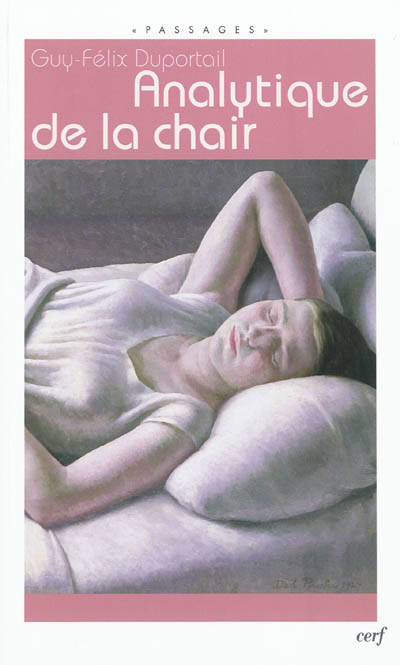
Mon corps est-il un objet parmi d'autres dans l'espace ou bien crée-t-il l'étendue qu'il perçoit jusqu'à l'écho des étoiles ? À quelle spatialité suis-je assujetti pour être relié « de l'intérieur » au monde et aux autres corps qui m'entourent ? Les dimensions de l'espace sont-elles des coordonnées de la matière morte ou sont-elles des variations modales de mon esprit ? C'est à la découverte de la spatialité du corps vivant que nous invite Guy-Félix Duportail dans son « Analytique de la chair ». Il nous apprend, entre autres, que la phénoménologie et la psychanalyse se rencontrent en ces lieux de la chair suivant des principes topologiques communs. G.-F. Duportail dessine le schéma intérieur de la subjectivité comme se donnant « à l'extérieur », dans le monde. La subjectivité incarnée se retourne comme un gant et se retrouve ainsi exposée au-dehors, dans son « sinthome », comme disait Lacan, dans son « implexe », comme disait Merleau-Ponty. Dans tous les cas, elle se réalise dans une « création » réparatrice de son mal-être. L'immanence est donc dans la transcendance, et l'espace-temps se réfléchit dans la chair, dans les tourbillons de sa jouissance. La présente « Analytique de la chair » révèle qu'un corps sans organes (Deleuze et Guattari) est certes moins qu'un noeud, mais demeure plus qu'un emmêlement, et qu'une chair sublime mais sans corps (Levinas, Henry) ne fait du visage qu'un masque, et de la Vie glorieuse du Moi qu'un éloge de la pulsion de mort.
--
Is my body an object in space just like any other, or does it create the span it perceives, even [up] to the echo of the stars? What [kind of] spatiality am I subject to, that links me ‘from the inside' to the world and other bodies around me? Are the dimensions of space the coordinates of dead matter or are they modal variations of my mind? Guy-Félix Duportail invites us to discover the spatiality of the living body in this Analytique de la chair. Among other things, he teaches us that phenomenology and psychoanalysis intersect in the places of flesh, following common topological principles. G.-F. Duportail sketches the inner schema of subjectivity ‘on the exterior' [outside itself?], in the world. Incarnate subjectivity is turned inside out like a glove and so exposed in its ‘sinthome' as Lacan put it, or in its ‘implexe' in the words of Merleau-Ponty [better: ‘in Merleau-Ponty's words' ?]. In any case, it is materialized in a ‘creation' that repairs its ill-being. Consequently immanence is in transcendence, and space-time is thought in flesh, in whirlpools of pleasure. This Analytique de la chair reveals that a body without organs (Deleuze and Guattari) is of course less than a knot, but remains more than a tangle and that sublime flesh without a body (Levinas, Henry) makes the face no more than a mask, and the glorious Life of the Ego merely a eulogy of the death drive.
--
Is my body an object in space just like any other, or does it create the span it perceives, even [up] to the echo of the stars? What [kind of] spatiality am I subject to, that links me ‘from the inside' to the world and other bodies around me? Are the dimensions of space the coordinates of dead matter or are they modal variations of my mind? Guy-Félix Duportail invites us to discover the spatiality of the living body in this Analytique de la chair. Among other things, he teaches us that phenomenology and psychoanalysis intersect in the places of flesh, following common topological principles. G.-F. Duportail sketches the inner schema of subjectivity ‘on the exterior' [outside itself?], in the world. Incarnate subjectivity is turned inside out like a glove and so exposed in its ‘sinthome' as Lacan put it, or in its ‘implexe' in the words of Merleau-Ponty [better: ‘in Merleau-Ponty's words' ?]. In any case, it is materialized in a ‘creation' that repairs its ill-being. Consequently immanence is in transcendence, and space-time is thought in flesh, in whirlpools of pleasure. This Analytique de la chair reveals that a body without organs (Deleuze and Guattari) is of course less than a knot, but remains more than a tangle and that sublime flesh without a body (Levinas, Henry) makes the face no more than a mask, and the glorious Life of the Ego merely a eulogy of the death drive.
Specificaties
Betrokkenen
- Auteur(s):
- Uitgeverij:
Inhoud
- Aantal bladzijden:
- 297
- Taal:
- Frans
Eigenschappen
- Productcode (EAN):
- 9782204093460
- Verschijningsdatum:
- 24/11/2011
- Uitvoering:
- Paperback
- Afmetingen:
- 150 mm x 240 mm
- Gewicht:
- 446 g


Alleen bij Standaard Boekhandel
+ 74 punten op je klantenkaart van Standaard Boekhandel
SOLDEN


Beoordelingen
We publiceren alleen reviews die voldoen aan de voorwaarden voor reviews. Bekijk onze voorwaarden voor reviews.