



Je cadeautjes zeker op tijd in huis hebben voor de feestdagen? Kom langs in onze winkels en vind het perfecte geschenk!
- Afhalen na 1 uur in een winkel met voorraad
- Gratis thuislevering in België vanaf € 30
- Ruim aanbod met 7 miljoen producten
Je cadeautjes zeker op tijd in huis hebben voor de feestdagen? Kom langs in onze winkels en vind het perfecte geschenk!
- Afhalen na 1 uur in een winkel met voorraad
- Gratis thuislevering in België vanaf € 30
- Ruim aanbod met 7 miljoen producten





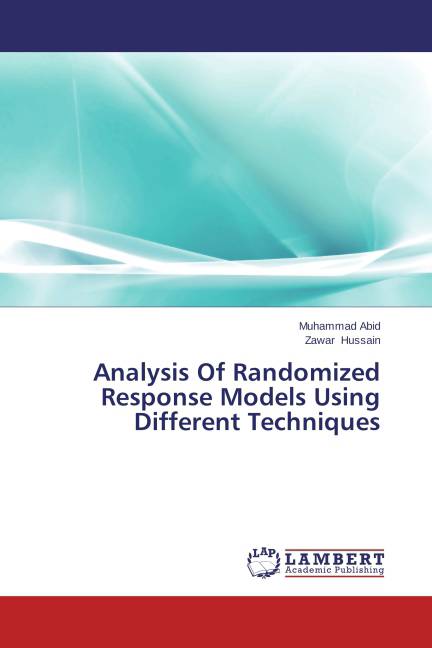
Analysis Of Randomized Response Models Using Different Techniques
Muhammad Abid, Zawar Hussain
Paperback | Engels
€ 60,95
+ 121 punten
Omschrijving
Sample surveys on human populations have established the fact that refusal to respond and intended giving of incorrect answers are two main sources of non-sampling error. The bias produced by these two sources of error is sometimes large enough to make the sample estimates seriously misleading. This problem becomes more serious when respondents are questioned about sensitive matters. A procedure was introduced by Warner (1965) to diminish bias due to deliberately misleading responses. This procedure enables the respondents to provide truthful information while protecting their privacy. We present a brief survey of the literature about randomized response techniques (RRTs). A common Bayesian approach when the data are obtained through Perri (2008) and Mahmmod et al. (1998) randomized response models.Based on the concept of jeopardy function, we derived efficiency conditions for the Warner (1965), Mangat et al. (1995) and Bhargava and Singh (2000) model compared to Mahmood et al. (1998) model.
Specificaties
Betrokkenen
- Auteur(s):
- Uitgeverij:
Inhoud
- Aantal bladzijden:
- 96
- Taal:
- Engels
Eigenschappen
- Productcode (EAN):
- 9783846508350
- Verschijningsdatum:
- 13/12/2012
- Uitvoering:
- Paperback
- Afmetingen:
- 150 mm x 220 mm
- Gewicht:
- 150 g


Alleen bij Standaard Boekhandel
+ 121 punten op je klantenkaart van Standaard Boekhandel
CADEAU


Beoordelingen
We publiceren alleen reviews die voldoen aan de voorwaarden voor reviews. Bekijk onze voorwaarden voor reviews.