


- Afhalen na 1 uur in een winkel met voorraad
- Gratis thuislevering in België vanaf € 30
- Ruim aanbod met 7 miljoen producten
- Afhalen na 1 uur in een winkel met voorraad
- Gratis thuislevering in België vanaf € 30
- Ruim aanbod met 7 miljoen producten




€ 120,00
+ 240 punten
Uitvoering
Omschrijving
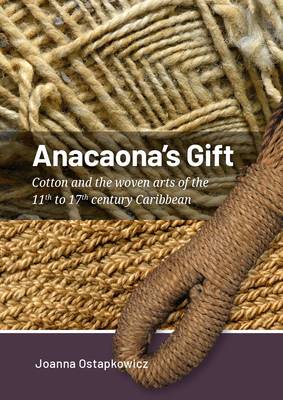
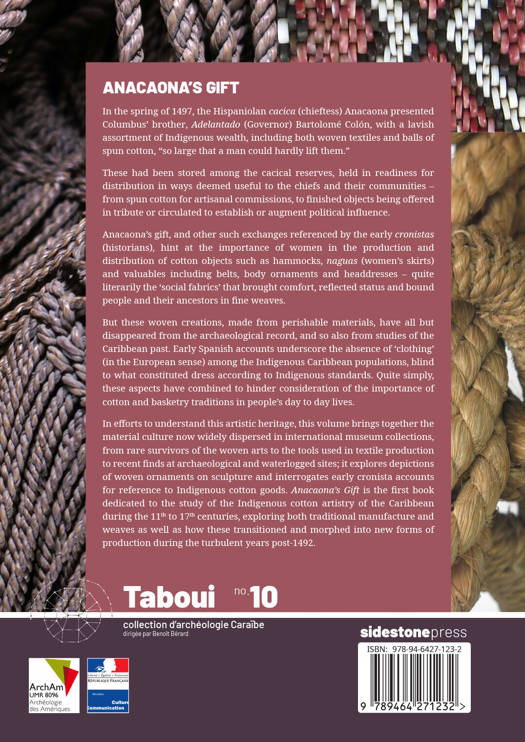
In the spring of 1497, the Hispaniolan cacica (chieftess) Anacaona presented Columbus' brother, Adelantado (Governor) Bartolomé Colón, with a lavish assortment of Indigenous wealth, including both woven textiles and balls of spun cotton, "so large that a man could hardly lift them."
These had been stored among the cacical reserves, held in readiness for distribution in ways deemed useful to the chiefs and their communities - from spun cotton for artisanal commissions, to finished objects being offered in tribute or circulated to establish or augment political influence.
Anacaona's gift, and other such exchanges referenced by the early cronistas (historians), hint at the importance of women in the production and distribution of cotton objects such as hammocks, naguas (women's skirts) and valuables including belts, body ornaments and headdresses - quite literarily the 'social fabrics' that brought comfort, reflected status and bound people and their ancestors in fine weaves.
But these woven creations, made from perishable materials, have all but disappeared from the archaeological record, and so also from studies of the Caribbean past. Early Spanish accounts underscore the absence of 'clothing' (in the European sense) among the Indigenous Caribbean populations, blind to what constituted dress according to Indigenous standards. Quite simply, these aspects have combined to hinder consideration of the importance of cotton and basketry traditions in people's day to day lives.
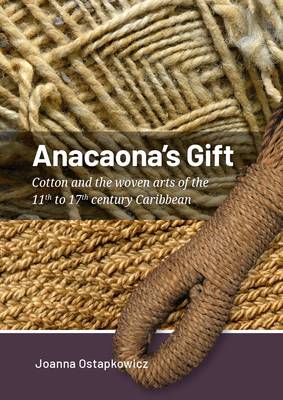
In efforts to understand this artistic heritage, this volume brings together the material culture now widely dispersed in international museum collections, from rare survivors of the woven arts to the tools used in textile production to recent finds at archaeological and waterlogged sites; it explores depictions of woven ornaments on sculpture and interrogates early cronista accounts for reference to Indigenous cotton goods. Anacaona's Gift is the first book dedicated to the study of the Indigenous cotton artistry of the Caribbean during the 11th to 17th centuries, exploring both traditional manufacture and weaves as well as how these transitioned and morphed into new forms of production during the turbulent years post-1492.
These had been stored among the cacical reserves, held in readiness for distribution in ways deemed useful to the chiefs and their communities - from spun cotton for artisanal commissions, to finished objects being offered in tribute or circulated to establish or augment political influence.
Anacaona's gift, and other such exchanges referenced by the early cronistas (historians), hint at the importance of women in the production and distribution of cotton objects such as hammocks, naguas (women's skirts) and valuables including belts, body ornaments and headdresses - quite literarily the 'social fabrics' that brought comfort, reflected status and bound people and their ancestors in fine weaves.
But these woven creations, made from perishable materials, have all but disappeared from the archaeological record, and so also from studies of the Caribbean past. Early Spanish accounts underscore the absence of 'clothing' (in the European sense) among the Indigenous Caribbean populations, blind to what constituted dress according to Indigenous standards. Quite simply, these aspects have combined to hinder consideration of the importance of cotton and basketry traditions in people's day to day lives.
In efforts to understand this artistic heritage, this volume brings together the material culture now widely dispersed in international museum collections, from rare survivors of the woven arts to the tools used in textile production to recent finds at archaeological and waterlogged sites; it explores depictions of woven ornaments on sculpture and interrogates early cronista accounts for reference to Indigenous cotton goods. Anacaona's Gift is the first book dedicated to the study of the Indigenous cotton artistry of the Caribbean during the 11th to 17th centuries, exploring both traditional manufacture and weaves as well as how these transitioned and morphed into new forms of production during the turbulent years post-1492.
Specificaties
Betrokkenen
- Auteur(s):
- Uitgeverij:
Inhoud
- Aantal bladzijden:
- 260
- Taal:
- Engels
- Reeks:
Eigenschappen
- Productcode (EAN):
- 9789464271249
- Verschijningsdatum:
- 15/12/2025
- Uitvoering:
- Hardcover
- Formaat:
- Genaaid
- Afmetingen:
- 178 mm x 254 mm


Alleen bij Standaard Boekhandel
+ 240 punten op je klantenkaart van Standaard Boekhandel

Beoordelingen
We publiceren alleen reviews die voldoen aan de voorwaarden voor reviews. Bekijk onze voorwaarden voor reviews.