


- Afhalen na 1 uur in een winkel met voorraad
- Gratis thuislevering in België vanaf € 30
- Ruim aanbod met 7 miljoen producten
- Afhalen na 1 uur in een winkel met voorraad
- Gratis thuislevering in België vanaf € 30
- Ruim aanbod met 7 miljoen producten





Omschrijving
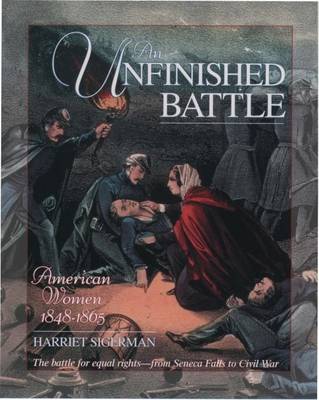
1848 was a year of revolution. In the United States, several determined women in upstate New York drafted a declaration of rights modeled on the 1776 Declaration of Independence and held a convention, which was attended by almost 300 women and men. The Seneca Falls Convention, writes Harriet Sigerman, launched the formal women's rights movement in the United States. It was one of many historical events in which American women left their mark in the years between 1848 and 1865. This period also witnessed the expansion of the nation's boundaries and new settlements out West, the conflagration of the Civil War, and the nation's emergence as an industrial power. American women played a vital role in all of these events, as homesteaders, factory workers, nurses, physicians, army scouts and spies, and social reformers. Among the women featured in this volume are Elizabeth Cady Stanton and Susan B. Anthony, the chief architects of the organized women's rights movement; Sojourner Truth, a powerful African-American orator who spoke for women's rights; Clara Barton, the dedicated Civil War nurse; and Harriet Tubman, a former slave who returned to the South more than 300 times to help free other slaves. Their stories and others tell of the setbacks and triumphs as women continued to fight for equal rights for all.
Specificaties
Betrokkenen
- Auteur(s):
- Uitgeverij:
Inhoud
- Aantal bladzijden:
- 144
- Taal:
- Engels
- Reeks:
- Reeksnummer:
- nr. 5
Eigenschappen
- Productcode (EAN):
- 9780195124033
- Verschijningsdatum:
- 26/03/1998
- Uitvoering:
- Paperback
- Formaat:
- Trade paperback (VS)
- Afmetingen:
- 192 mm x 237 mm
- Gewicht:
- 285 g


Alleen bij Standaard Boekhandel
+ 41 punten op je klantenkaart van Standaard Boekhandel
Cadeau

AANGERADEN


Beoordelingen
We publiceren alleen reviews die voldoen aan de voorwaarden voor reviews. Bekijk onze voorwaarden voor reviews.