


- Afhalen na 1 uur in een winkel met voorraad
- Gratis thuislevering in België vanaf € 30
- Ruim aanbod met 7 miljoen producten
- Afhalen na 1 uur in een winkel met voorraad
- Gratis thuislevering in België vanaf € 30
- Ruim aanbod met 7 miljoen producten





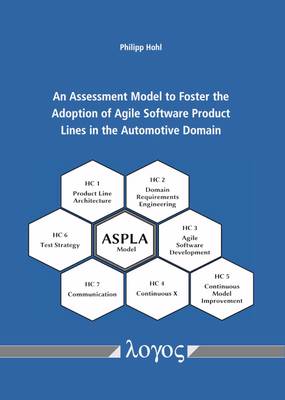
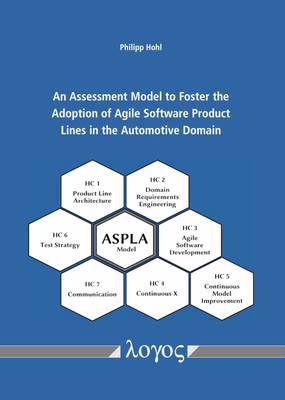
An N Assessment Model to Foster the Adoption of Agile Software Product Lines in the Automotive Domain
Philipp Hohl
Paperback | Engels
€ 96,95
+ 193 punten
Omschrijving
The automotive industry is changing rapidly. E-Mobility, self-driving and other trends revolutionize the automotive industry. These trends have to be addressed when developing new car generations and future mobility solutions. This is challenging for the automotive domain with its special peculiarities such as rigid quality and safety requirements, deep integration between hardware and software, strong focus on development processes, and strong supplier involvement. Traditionally, software product lines have been used to cope with the large amount of software in cars by means of software reuse. Anyhow, there is a lack of knowledge about how to react flexibly on rapid changes with software product line development. The use of agile software development methods promises a flexible development with the possibility to react fast to changes. Interviews, workshops and literature reviews revealed the necessity to combine agile practices with software product lines for automotive software development. The thesis identifies the factors that hinder or support the adoption of agile practices in the automotive domain. In addition, another essential goal of this thesis was to develop an approach for supporting organizations with the establishment of agile software product lines. In order to fulfill this goal, an assessment and improvement model, the so-called Agile Software Product Lines in Automotive Model (ASPLA Model), was developed to foster the adoption of agile software product lines in the automotive domain. The ASPLA Model identifies improvement potential for a change towards agile software product lines and provides a prioritized list of recommendations on how to combine agile software development with software product lines within the assessed development process. Main characteristics of the ASPLA Model are the compatibility with the widely-used ASPICE model, the integration of a new product-focused category and empirically-based recommendations. The evaluation of the ASPLA Model indicated that the assessment can help to foster the combination of agile software development with software product lines in the automotive domain. A case study compared the results from the ASPLA Model with the assessment results from experts. In comparison with experts' assessments and recommendations, the model produced similar or even better results.
Specificaties
Betrokkenen
- Auteur(s):
- Uitgeverij:
Inhoud
- Aantal bladzijden:
- 279
- Taal:
- Engels
Eigenschappen
- Productcode (EAN):
- 9783832548797
- Verschijningsdatum:
- 1/04/2019
- Uitvoering:
- Paperback
- Formaat:
- Trade paperback (VS)
- Afmetingen:
- 145 mm x 211 mm
- Gewicht:
- 1473 g


Alleen bij Standaard Boekhandel
+ 193 punten op je klantenkaart van Standaard Boekhandel

Beoordelingen
We publiceren alleen reviews die voldoen aan de voorwaarden voor reviews. Bekijk onze voorwaarden voor reviews.