


- Afhalen na 1 uur in een winkel met voorraad
- Gratis thuislevering in België vanaf € 30
- Ruim aanbod met 7 miljoen producten
- Afhalen na 1 uur in een winkel met voorraad
- Gratis thuislevering in België vanaf € 30
- Ruim aanbod met 7 miljoen producten





€ 53,95
+ 107 punten
Uitvoering
Omschrijving
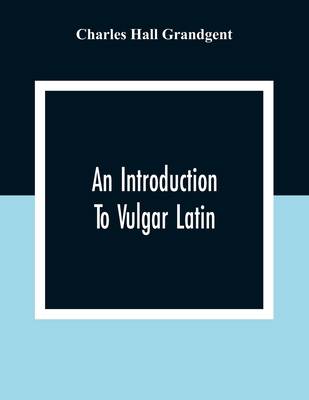
An Introduction to Vulgar Latin reveals the everyday speech beneath classical Latin's marble. A living tongue lies beneath. Hall Grandgent brings technical exactitude and readable exposition to the study of colloquial Latin, offering an introduction to Vulgar Latin that surveys phonetic trends, morphological simplifications, idiomatic shifts and the social uses of speech. The book balances comparative grammar with narrative clarity, making complex arguments about the evolution of Latin accessible without dumbing down the evidence. Grounded in philological method and comparative evidence, Grandgent's prose guides non-specialists through technical material without sacrificing nuance. Readers interested in the Romance languages' origins, or in how ordinary talk became written form, will find a direct, evidence-led account that connects small shifts to the modern map of European languages. Part textbook, part classical philology reference, Grandgent's work has long served as a historical linguistics guide and as a trusted comparative grammar of Latin. Readable as a Latin language textbook for advanced undergraduates or as material within a university Latin curriculum, it is an essential companion for language history students and for scholars of late Roman Empire studies. Its clear, forensic analyses illuminate linguistic change in antiquity and the pathways by which vernacular speech shaped the family of ancient European languages. Teachers and researchers still draw on its distinctions when tracing continuity and divergence; its categories continue to inform classroom syllabuses and specialist debate about the Romance family. Its influence reaches beyond philology into literary studies and cultural history, where traces of everyday speech inform readings of late antique texts. Republished by Alpha Editions in a careful modern edition, this volume preserves the spirit of the original while making it effortless to enjoy today - a heritage title prepared for readers and collectors alike. Accessible and elegantly presented, this edition welcomes casual readers curious about language history and rewards classic-literature collectors seeking a cultural treasure and a thoughtful companion for any shelf. Ideal both for close study and for a discerning shelf.
Specificaties
Betrokkenen
- Auteur(s):
- Uitgeverij:
Inhoud
- Aantal bladzijden:
- 242
- Taal:
- Engels
Eigenschappen
- Productcode (EAN):
- 9789354308512
- Verschijningsdatum:
- 15/12/2020
- Uitvoering:
- Paperback
- Formaat:
- Trade paperback (VS)
- Afmetingen:
- 216 mm x 279 mm
- Gewicht:
- 571 g


Alleen bij Standaard Boekhandel
+ 107 punten op je klantenkaart van Standaard Boekhandel
Cadeau

AANGERADEN


Beoordelingen
We publiceren alleen reviews die voldoen aan de voorwaarden voor reviews. Bekijk onze voorwaarden voor reviews.