


- Afhalen na 1 uur in een winkel met voorraad
- Gratis thuislevering in België vanaf € 30
- Ruim aanbod met 7 miljoen producten
- Afhalen na 1 uur in een winkel met voorraad
- Gratis thuislevering in België vanaf € 30
- Ruim aanbod met 7 miljoen producten





Omschrijving
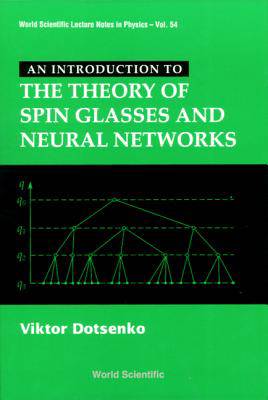
This book aims to describe in simple terms the new area of statistical mechanics known as spin-glasses, encompassing systems in which quenched disorder is the dominant factor. The book begins with a non-mathematical explanation of the problem, and the modern understanding of the physics of the spin-glass state is formulated in general terms. Next, the 'magic' of the replica symmetry breaking scheme is demonstrated and the physics behind it discussed. Recent experiments on real spin-glass materials are briefly described to demonstrate how this somewhat abstract physics can be studied in the laboratory. The final chapters of the book are devoted to statistical models of neural networks.The material here is self-contained and should be accessible to students with a basic knowledge of theoretical physics and statistical mechanics. It has been used for a one-term graduate lecture course at the Landau Institute for Theoretical Physics.
Specificaties
Betrokkenen
- Auteur(s):
- Uitgeverij:
Inhoud
- Aantal bladzijden:
- 164
- Taal:
- Engels
- Reeks:
- Reeksnummer:
- nr. 54
Eigenschappen
- Productcode (EAN):
- 9789810218737
- Verschijningsdatum:
- 1/01/1995
- Uitvoering:
- Hardcover
- Formaat:
- Genaaid
- Afmetingen:
- 162 mm x 224 mm
- Gewicht:
- 344 g


Alleen bij Standaard Boekhandel
+ 173 punten op je klantenkaart van Standaard Boekhandel
AANGERADEN


Beoordelingen
We publiceren alleen reviews die voldoen aan de voorwaarden voor reviews. Bekijk onze voorwaarden voor reviews.