


- Afhalen na 1 uur in een winkel met voorraad
- Gratis thuislevering in België vanaf € 30
- Ruim aanbod met 7 miljoen producten
- Afhalen na 1 uur in een winkel met voorraad
- Gratis thuislevering in België vanaf € 30
- Ruim aanbod met 7 miljoen producten





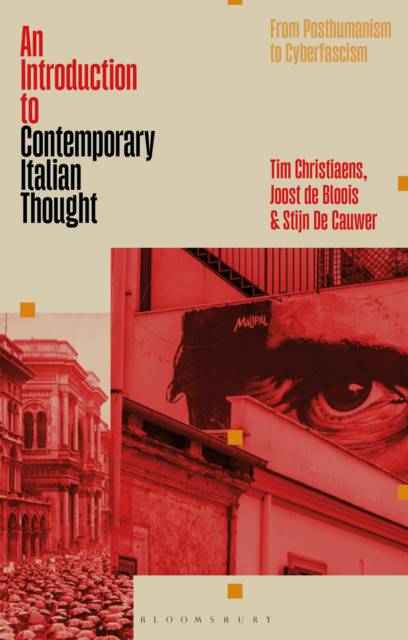
An Introduction to Contemporary Italian Thought
From Posthumanism to Cyberfascism
Tim Christiaens, Joost de Bloois, Stijn de Cauwer
Hardcover | Engels
€ 127,45
+ 254 punten
Uitvoering
Omschrijving
Over the past three decades, Italian thought has emerged as a major field within continental philosophy. But what are the latest developments since Italian theory rose to a peak of popularity in the 2000s? This book offers an accessible and incisive introduction to contemporary Italian thought, revealing above all its continued relevance to some of the most pressing political, social and ethical conflicts today.
Broadening the idea of Italian thought beyond biopolitics, An Introduction to Contemporary Italian Thought engages with a number of leading and upcoming philosophers, including Silvia Federici, Rosi Braidotti, Donatella di Cesare, Emanuele Coccia, Sandro Mezzadra, Franco 'Bifo' Berardi and Federico Luisetti. It demonstrates how Italian theory resonates in a wide variety of current debates, from digital technology, pandemics and populism to cyberfascism, environmentalism and decolonization. This not only uncovers the fruitfulness of Italian philosophy but further allows for fresh perspectives on debates dominated by well-trodden and often dated arguments. In consideration of populism, for instance, this book does not so much examine Donald Trump but rather turns to Silvio Berlusconi and Giorgia Meloni, just as its discussions of the digitization of work look beyond Silicon Valley to working conditions in EU and Global South from the perspective of Italian (post)workerism, and the Anthropocene is considered in light of radical zoological egalitarianism as it emerges in contemporary Italian thought. Tackling head-on the complex and porous notion of what constitutes 'Italian thought', Christiaens, De Bloois and De Cauwer bring new understanding to contemporary Italian theory and, with it, novel perspectives on current critical issues.Specificaties
Betrokkenen
- Auteur(s):
- Uitgeverij:
Inhoud
- Aantal bladzijden:
- 248
- Taal:
- Engels
Eigenschappen
- Productcode (EAN):
- 9781350407602
- Verschijningsdatum:
- 22/01/2026
- Uitvoering:
- Hardcover
- Formaat:
- Genaaid
- Afmetingen:
- 140 mm x 216 mm
- Gewicht:
- 435 g



Alleen bij Standaard Boekhandel
+ 254 punten op je klantenkaart van Standaard Boekhandel
Cadeau

AANGERADEN


Beoordelingen
We publiceren alleen reviews die voldoen aan de voorwaarden voor reviews. Bekijk onze voorwaarden voor reviews.