


- Afhalen na 1 uur in een winkel met voorraad
- Gratis thuislevering in België vanaf € 30
- Ruim aanbod met 7 miljoen producten
- Afhalen na 1 uur in een winkel met voorraad
- Gratis thuislevering in België vanaf € 30
- Ruim aanbod met 7 miljoen producten





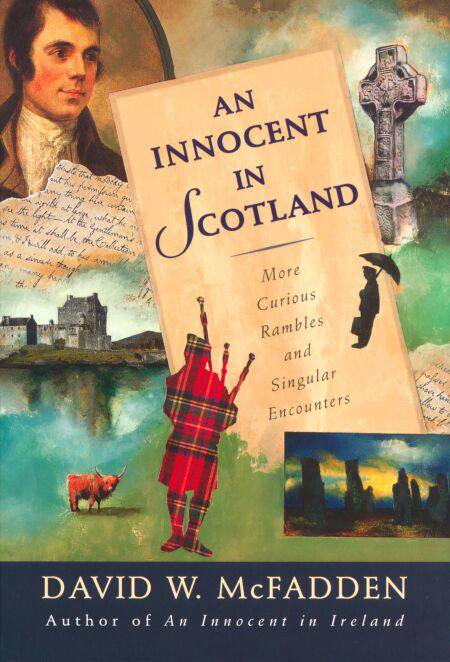
An Innocent in Scotland E-BOOK
More Curious Rambles and Singular Encounters
David McFadden
E-book | Engels
€ 18,68
+ 18 punten
Omschrijving
In 1995, David W. McFadden published An Innocent in Ireland: Curious Rambles and Singular Encounters, a quirky and affectionate account of his travels around Ireland. In undertaking the trip, he chose as his guide H. V. Morton, the prolific travel writer of the 1920s and 1930s, whose In Search of Ireland (part of Morton’s famous In Search of... series) had been familiar to him since childhood.
Now, setting out to explore Scotland, his family’s ancestral home, McFadden plans to use the same technique: to follow Morton’s route around the country, observing how things have changed and in what ways they remain the same. As in An Innocent in Ireland, however, his own inquiring mind and engaging personality take over, and Morton appears less and less as McFadden becomes increasingly absorbed by the landscape – and particularly by the people.
Starting in the Lowlands, he travels through Burns country (examining verses that Burns is alleged to have inscribed on a Dumfries window with his diamond ring) and up the east coast to the Highlands. There he lingers by Loch Ness (spotting nothing but tourists), before heading over to the west coast and falling in love with it – particularly with the islands of Mull and Iona. Through the entire trip, McFadden charts an erratic course, led only by H. V. Morton and his own acute eye and very lively curiosity. As he does so, he records his extremely personal impressions, which are wry, amused – and often more astute than he lets on.
The reader won’t find many of the traditional Scottish tourist sites in this account. Rather, as in An Innocent in Ireland, McFadden loves a good chat, and he wisely lets the many characters he meets speak for themselves. He gives generous attention to a variety of talkative barmen, hoteliers, shopkeepers, as well as to passersby that he encounters in the course of his travels. Their conversations, ranging from the instructive or humorous to the eccentric and even surreal, give a thoroughly entertaining view of a Scotland the guidebooks never reveal.
Still quirky, affectionate, always ready to be intrigued or amused, David McFadden makes an ideal companion for any armchair traveller.
Now, setting out to explore Scotland, his family’s ancestral home, McFadden plans to use the same technique: to follow Morton’s route around the country, observing how things have changed and in what ways they remain the same. As in An Innocent in Ireland, however, his own inquiring mind and engaging personality take over, and Morton appears less and less as McFadden becomes increasingly absorbed by the landscape – and particularly by the people.
Starting in the Lowlands, he travels through Burns country (examining verses that Burns is alleged to have inscribed on a Dumfries window with his diamond ring) and up the east coast to the Highlands. There he lingers by Loch Ness (spotting nothing but tourists), before heading over to the west coast and falling in love with it – particularly with the islands of Mull and Iona. Through the entire trip, McFadden charts an erratic course, led only by H. V. Morton and his own acute eye and very lively curiosity. As he does so, he records his extremely personal impressions, which are wry, amused – and often more astute than he lets on.
The reader won’t find many of the traditional Scottish tourist sites in this account. Rather, as in An Innocent in Ireland, McFadden loves a good chat, and he wisely lets the many characters he meets speak for themselves. He gives generous attention to a variety of talkative barmen, hoteliers, shopkeepers, as well as to passersby that he encounters in the course of his travels. Their conversations, ranging from the instructive or humorous to the eccentric and even surreal, give a thoroughly entertaining view of a Scotland the guidebooks never reveal.
Still quirky, affectionate, always ready to be intrigued or amused, David McFadden makes an ideal companion for any armchair traveller.
Specificaties
Betrokkenen
- Auteur(s):
- Uitgeverij:
Inhoud
- Aantal bladzijden:
- 329
- Taal:
- Engels
Eigenschappen
- Productcode (EAN):
- 9780771061363
- Verschijningsdatum:
- 5/12/2016
- Uitvoering:
- E-book
- Beveiligd met:
- Adobe DRM
- Formaat:
- ePub


Alleen bij Standaard Boekhandel
+ 18 punten op je klantenkaart van Standaard Boekhandel
Cadeau

AANGERADEN


Beoordelingen
We publiceren alleen reviews die voldoen aan de voorwaarden voor reviews. Bekijk onze voorwaarden voor reviews.