


- Afhalen na 1 uur in een winkel met voorraad
- Gratis thuislevering in België vanaf € 30
- Ruim aanbod met 7 miljoen producten
- Afhalen na 1 uur in een winkel met voorraad
- Gratis thuislevering in België vanaf € 30
- Ruim aanbod met 7 miljoen producten





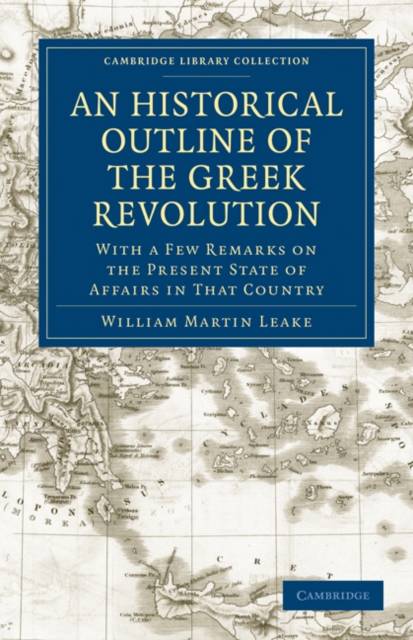
An Historical Outline of the Greek Revolution
With a Few Remarks on the Present State of Affairs in That Country
William Martin Leake
€ 67,95
+ 135 punten
Omschrijving
William Martin Leake (1777-1860) was a British military officer and classical scholar interested in reconstructing the topography of ancient cities. He was a founding member of the Royal Geographical Society and was elected a Fellow of the Royal Society in 1815. After his retirement in 1815 he devoted the rest of his life to topographical and classical studies. First published in 1826, this second edition contains a detailed discussion of the historical background of and events during the first years of the Greek Revolution (1821-1830). Focusing on the Peloponnese, Leake explores the political and social condition of Greece under the Ottoman Empire, discussing the causes of the Revolution and providing a detailed narrative of its course. This volume, the first scholarly work on the subject, provides a valuable contemporary account by an author who was familiar with both the territory and the peoples that were his subject.
Specificaties
Betrokkenen
- Auteur(s):
- Uitgeverij:
Inhoud
- Aantal bladzijden:
- 226
- Taal:
- Engels
- Reeks:
Eigenschappen
- Productcode (EAN):
- 9781108021258
- Verschijningsdatum:
- 18/11/2010
- Uitvoering:
- Paperback
- Formaat:
- Trade paperback (VS)
- Afmetingen:
- 140 mm x 216 mm
- Gewicht:
- 290 g



Alleen bij Standaard Boekhandel
+ 135 punten op je klantenkaart van Standaard Boekhandel
Cadeau

AANGERADEN


Beoordelingen
We publiceren alleen reviews die voldoen aan de voorwaarden voor reviews. Bekijk onze voorwaarden voor reviews.