


- Afhalen na 1 uur in een winkel met voorraad
- Gratis thuislevering in België vanaf € 30
- Ruim aanbod met 7 miljoen producten
- Afhalen na 1 uur in een winkel met voorraad
- Gratis thuislevering in België vanaf € 30
- Ruim aanbod met 7 miljoen producten





€ 4,99
+ 4 punten
Uitvoering
Omschrijving
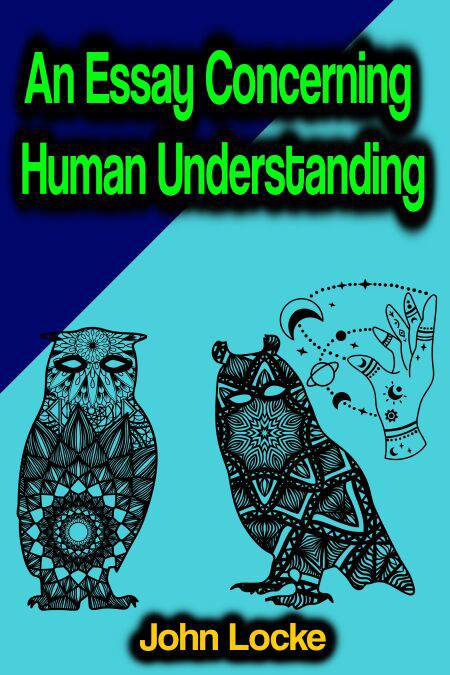
An Essay Concerning Human Understanding John Locke - An Essay Concerning Human Understanding is a work by John Locke concerning the foundation of human knowledge and understanding. It first appeared in 1689 (although dated 1690) with the printed title An Essay Concerning Human Understanding. He describes the mind at birth as a blank slate (tabula rasa, although he did not use those actual words) filled later through experience. The essay was one of the principal sources of empiricism in modern philosophy, and influenced many enlightenment philosophers, such as David Hume and George Berkeley.Book I of the Essay is Locke's attempt to refute the rationalist notion of innate ideas. Book II sets out Locke's theory of ideas, including his distinction between passively acquired simple ideassuch as "red," "sweet," "round"and actively built complex ideas, such as numbers, causes and effects, abstract ideas, ideas of substances, identity, and diversity. Locke also distinguishes between the truly existing primary qualities of bodies, like shape, motion and the arrangement of minute particles, and the secondary qualities that are "powers to produce various sensations in us" such as "red" and "sweet." These secondary qualities, Locke claims, are dependent on the primary qualities. He also offers a theory of personal identity, offering a largely psychological criterion. Book III is concerned with language, and Book IV with knowledge, including intuition, mathematics, moral philosophy, natural philosophy ("science"), faith, and opinion.
Specificaties
Betrokkenen
- Auteur(s):
- Uitgeverij:
Inhoud
- Aantal bladzijden:
- 888
- Taal:
- Engels
Eigenschappen
- Productcode (EAN):
- 9783986772628
- Verschijningsdatum:
- 30/10/2021
- Uitvoering:
- E-book
- Beveiligd met:
- Digital watermarking
- Formaat:
- ePub


Alleen bij Standaard Boekhandel
+ 4 punten op je klantenkaart van Standaard Boekhandel
Cadeau

AANGERADEN


Beoordelingen
We publiceren alleen reviews die voldoen aan de voorwaarden voor reviews. Bekijk onze voorwaarden voor reviews.