


- Afhalen na 1 uur in een winkel met voorraad
- Gratis thuislevering in België vanaf € 30
- Ruim aanbod met 7 miljoen producten
- Afhalen na 1 uur in een winkel met voorraad
- Gratis thuislevering in België vanaf € 30
- Ruim aanbod met 7 miljoen producten





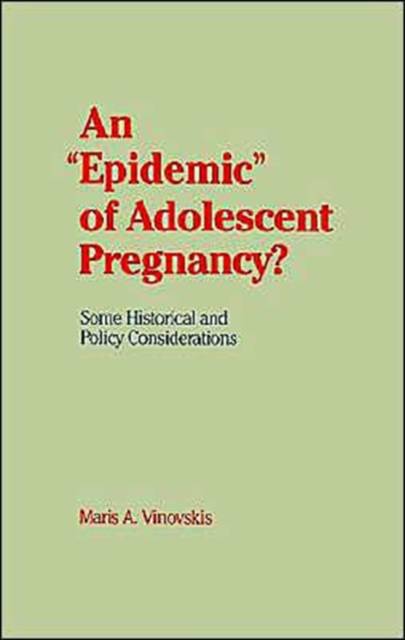
An "Epidemic" of Adolescent Pregnancy?
Some Historical and Policy Considerations
Maris A Vinovskis
Hardcover | Engels
€ 217,95
+ 435 punten
Omschrijving
In classrooms and in living rooms, in research institutions and on Capitol Hill, teenage pregnancy is one of the most controversial public issues of our day. Yet after all the investigation and government effort, what is really known about the problem of adolescent pregnancy and how to deal with it? And what is the role of the social scientist and historian in a public issue of this kind? In this study, Maris Vinovskis--a prominent demographic historian and a participant in both Carter's and Reagan's Presidential initiatives on teenage pregnancy--sets these questions within a historical framework and discusses a host of current issues and policy considerations. Vinovskis begins by examining adolescent sexuality and childbearing in early America and evaluating whether there has in fact been an "epidemic" of adolescent pregnancy in American history. In the following chapters, he addresses the rise of adolescent pregnancy as a national issue and assesses the government's response to it, both in Congress and the Presidency. Bringing his unique qualifications as a historian and a policy planner to his study, Vinovskis offers readers a provocative new context for understanding a pressing public issue of the 1980s.
Specificaties
Betrokkenen
- Auteur(s):
- Uitgeverij:
Inhoud
- Aantal bladzijden:
- 304
- Taal:
- Engels
Eigenschappen
- Productcode (EAN):
- 9780195049978
- Verschijningsdatum:
- 31/12/1987
- Uitvoering:
- Hardcover
- Formaat:
- Genaaid
- Afmetingen:
- 149 mm x 218 mm
- Gewicht:
- 508 g


Alleen bij Standaard Boekhandel
+ 435 punten op je klantenkaart van Standaard Boekhandel

Beoordelingen
We publiceren alleen reviews die voldoen aan de voorwaarden voor reviews. Bekijk onze voorwaarden voor reviews.