


- Afhalen na 1 uur in een winkel met voorraad
- Gratis thuislevering in België vanaf € 30
- Ruim aanbod met 7 miljoen producten
- Afhalen na 1 uur in een winkel met voorraad
- Gratis thuislevering in België vanaf € 30
- Ruim aanbod met 7 miljoen producten





€ 51,95
+ 103 punten
Eenvoudig bestellen
Veilig betalen


Gratis thuislevering vanaf € 30 (via bpost)
Gratis levering in je Standaard Boekhandel
Omschrijving
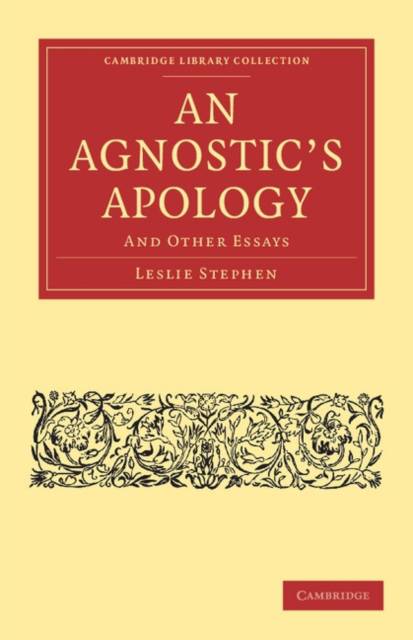
The term 'agnostic' was probably coined by T. H. Huxley during a speech to the Metaphysical Society in 1869. From the Greek 'agnostos', 'unknown', it was derived from St Paul's mention of an Athenian altar inscribed 'to the unknown god'. With these overtones of ancient philosophy, agnosticism became the tag of an emergent school of thought which posited that the existence of anything beyond the material and measurable should be considered unknowable. In this collection of seven essays, first published as one volume in 1893, Leslie Stephen (1832-1904) makes a study of the 'unknown'. Across the essays, he presents arguments for the intrinsic agnosticism of many of the basic tenets of deism, explores the way in which humans construct dreams and realities, and examines the relationship between physics and philosophy. This readable and entertaining book will be of interest to students of both theology and philosophy.
Specificaties
Betrokkenen
- Auteur(s):
- Uitgeverij:
Inhoud
- Aantal bladzijden:
- 394
- Taal:
- Engels
- Reeks:
Eigenschappen
- Productcode (EAN):
- 9781108047555
- Verschijningsdatum:
- 28/06/2012
- Uitvoering:
- Paperback
- Formaat:
- Trade paperback (VS)
- Afmetingen:
- 140 mm x 216 mm
- Gewicht:
- 498 g


Alleen bij Standaard Boekhandel
+ 103 punten op je klantenkaart van Standaard Boekhandel
CADEAU

AANGERADEN


Beoordelingen
We publiceren alleen reviews die voldoen aan de voorwaarden voor reviews. Bekijk onze voorwaarden voor reviews.