


- Afhalen na 1 uur in een winkel met voorraad
- Gratis thuislevering in België vanaf € 30
- Ruim aanbod met 7 miljoen producten
- Afhalen na 1 uur in een winkel met voorraad
- Gratis thuislevering in België vanaf € 30
- Ruim aanbod met 7 miljoen producten





€ 145,45
+ 290 punten
Omschrijving
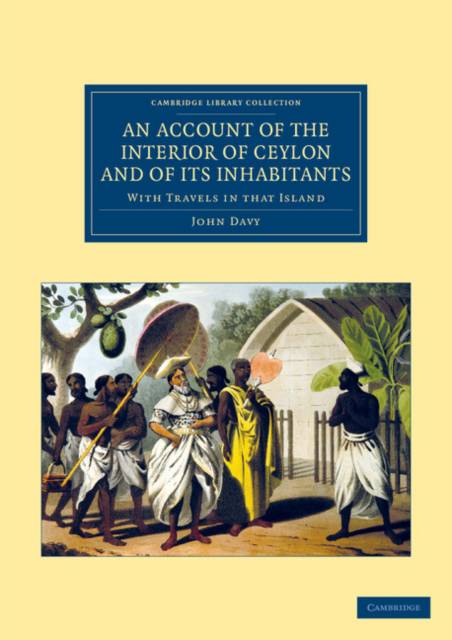
John Davy (1790-1868), the younger brother of the chemist Sir Humphry Davy, published this account of Ceylon (present-day Sri Lanka) in 1821. An army surgeon and later Fellow of the Royal Society, he also wrote books on the Ionian Islands and the West Indies (also reissued in this series) and edited his brother's collected works. This book is a detailed study based on interviews with the islanders and Davy's own observations during his four-year visit. Part I is an overview of the natural history of the island - including its geography, geology, zoology and climate - as well as its people, demography, political system and culture, including architecture, craftwork and languages. Part II details Davy's travels within the country. With a number of beautiful reproductions of native drawings, as well as Davy's own, the work remains a rich resource for the insights of a Victorian polymath into early nineteenth-century Ceylon.
Specificaties
Betrokkenen
- Auteur(s):
- Uitgeverij:
Inhoud
- Aantal bladzijden:
- 574
- Taal:
- Engels
- Reeks:
Eigenschappen
- Productcode (EAN):
- 9781108046695
- Verschijningsdatum:
- 7/06/2012
- Uitvoering:
- Paperback
- Formaat:
- Trade paperback (VS)
- Afmetingen:
- 210 mm x 297 mm
- Gewicht:
- 1356 g


Alleen bij Standaard Boekhandel
+ 290 punten op je klantenkaart van Standaard Boekhandel
Cadeau

AANGERADEN


Beoordelingen
We publiceren alleen reviews die voldoen aan de voorwaarden voor reviews. Bekijk onze voorwaarden voor reviews.