


- Afhalen na 1 uur in een winkel met voorraad
- Gratis thuislevering in België vanaf € 30
- Ruim aanbod met 7 miljoen producten
- Afhalen na 1 uur in een winkel met voorraad
- Gratis thuislevering in België vanaf € 30
- Ruim aanbod met 7 miljoen producten





€ 25,45
+ 50 punten
Omschrijving
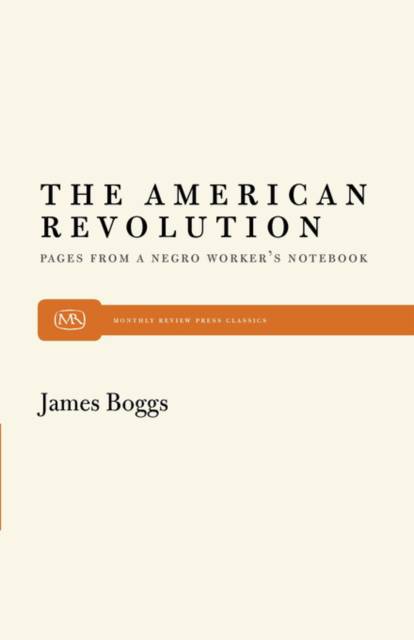
James Boggs, born in Marion Junction, Alabama in 1919, never dreamed of becoming President or a locomotive engineer. He grew up in a world where the white folks are gentlemen by day and Ku Klux Klanners at night. Marion Junction is in Dallas County where as late as 1963, although African-Americans made up over 57 percent of the total county population of 57,000, only 130 were registered voters. After graduating from Dunbar High School in Bessemer, Alabama, in 1937, Boggs took the first freight train north, bumming his way through the western part of the country, working in the hop fields of the state of Washington, cutting ice in Minnesota, and finally ending up in Detroit where he worked on WPA until the Second World War gave him a chance to enter the Chrysler auto plant. Both a keen analysis of U.S. society and a passionate call for revolutionary struggle, The American Revolution has been translated into French, Italian, Japanese, Spanish, Catalan, and Portuguese.
Specificaties
Betrokkenen
- Auteur(s):
- Uitgeverij:
Inhoud
- Aantal bladzijden:
- 148
- Taal:
- Engels
- Reeks:
Eigenschappen
- Productcode (EAN):
- 9780853450153
- Verschijningsdatum:
- 18/11/2009
- Uitvoering:
- Paperback
- Formaat:
- Trade paperback (VS)
- Afmetingen:
- 140 mm x 216 mm
- Gewicht:
- 195 g


Alleen bij Standaard Boekhandel
+ 50 punten op je klantenkaart van Standaard Boekhandel
Cadeau

AANGERADEN


Beoordelingen
We publiceren alleen reviews die voldoen aan de voorwaarden voor reviews. Bekijk onze voorwaarden voor reviews.