



Je cadeautjes zeker op tijd in huis hebben voor de feestdagen? Kom langs in onze winkels en vind het perfecte geschenk!
- Afhalen na 1 uur in een winkel met voorraad
- Gratis thuislevering in België vanaf € 30
- Ruim aanbod met 7 miljoen producten
Je cadeautjes zeker op tijd in huis hebben voor de feestdagen? Kom langs in onze winkels en vind het perfecte geschenk!
- Afhalen na 1 uur in een winkel met voorraad
- Gratis thuislevering in België vanaf € 30
- Ruim aanbod met 7 miljoen producten





€ 81,45
+ 162 punten
Omschrijving
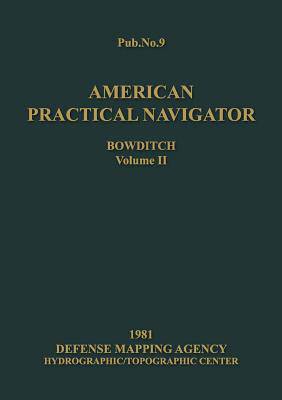
This historic book may have numerous typos and missing text. Purchasers can download a free scanned copy of the original book (without typos) from the publisher. Not indexed. Not illustrated. 1920 Excerpt: ...is the same as the latitude of the point on the line A', R/J 25 19'.4 S. B115 31.5 W. We now have two Sumner linee, A'and B', under Case I, whose common latitude is 25 19MS., and whose longitudes on the common parallel are 114 61K.7 and 115 31'.5. Hence, the difference of longitude on the common parallel is 115 31'.5 W. 114 59'.7 W. CHAPTER XVI. THE PEAOTIOE 01 NAVIGATION AT SEA. 381. Having set forth in previous chapters the methods of working dead reckoning and of solving problems to find the latitude, longitude, chronometer correction, and azimuth from astronomical observations, it will be the aim of the present chapter to describe the conditions which govern the choice and employment of the various problems, together with certain considerations by which the navigator may be guided in his practical work at sea. 382. Departure And Dead Reckoning.--On beginning a voyage, a good departure must, be taken while landmarks are still in view and favorably located for the purpose; this becomes the origin of the dead reckoning, which, with frequent new departures from positions by observation, is kept up to the completion of the voyage, thus enabling the mariner to know, with a fair degree of accuracy, the position of his vessel at any instant. At the moment of taking the departure, the reading of the patent log (which should have been put over at least long enough previously to be regularly running) must be recorded, and thereafter at the time of taking each sight and at every other time when a position is required for any purpose, the log reading must also be noted. It is likewise well to read the log each hour; for general information as to the speed of the vessel as well as to observe that it is in proper running order and that the rotator has not been fouled ...
Specificaties
Betrokkenen
- Auteur(s):
- Uitgeverij:
Inhoud
- Aantal bladzijden:
- 974
- Taal:
- Engels
Eigenschappen
- Productcode (EAN):
- 9781937196264
- Verschijningsdatum:
- 1/01/1981
- Uitvoering:
- Paperback
- Formaat:
- Trade paperback (VS)
- Afmetingen:
- 148 mm x 210 mm
- Gewicht:
- 1138 g


Alleen bij Standaard Boekhandel
+ 162 punten op je klantenkaart van Standaard Boekhandel
CADEAU


Beoordelingen
We publiceren alleen reviews die voldoen aan de voorwaarden voor reviews. Bekijk onze voorwaarden voor reviews.