


- Afhalen na 1 uur in een winkel met voorraad
- Gratis thuislevering in België vanaf € 30
- Ruim aanbod met 7 miljoen producten
- Afhalen na 1 uur in een winkel met voorraad
- Gratis thuislevering in België vanaf € 30
- Ruim aanbod met 7 miljoen producten





€ 135,95
+ 271 punten
Uitvoering
Omschrijving
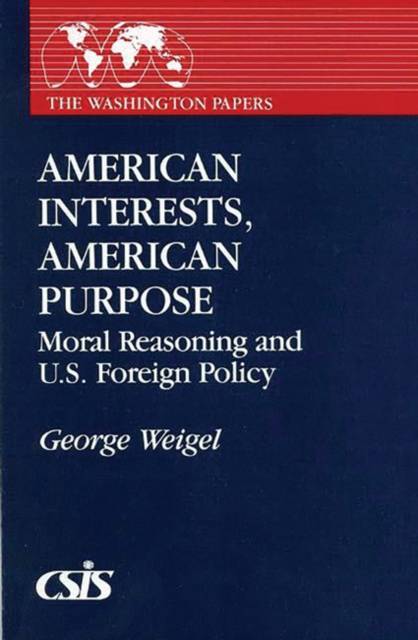
American Interests, Amercan Purpose explores the relationship between moral norms and U.S. foreign policy. The book does not so much attempt to provide a theoretical framework for the ongoing debate of morality and foreign policy as to examine four different controversial aspects of the argument. Weigel begins with a discussion of the cultural Protestant moralism that characterized Woodrow Wilson's approach to world politics. Here, the author suggests that the discussion involves the fundamental question, What is morality or moral reasoning? The book goes on to examine the pressures put on the foreign policy debate by the rise of modern totalitarianism. Weigel examines the modern cleric's arguments against nuclear deterrents. Finally, the book sketches the moral, strategic, and empirical case for U.S. foreign policy in which support for indigenous democratic forces throughout the world has a high priority.
Specificaties
Betrokkenen
- Auteur(s):
- Uitgeverij:
Inhoud
- Aantal bladzijden:
- 122
- Taal:
- Engels
- Reeks:
Eigenschappen
- Productcode (EAN):
- 9780275933357
- Verschijningsdatum:
- 7/07/1989
- Uitvoering:
- Hardcover
- Formaat:
- Genaaid
- Afmetingen:
- 156 mm x 234 mm
- Gewicht:
- 349 g


Alleen bij Standaard Boekhandel
+ 271 punten op je klantenkaart van Standaard Boekhandel
Cadeau

AANGERADEN


Beoordelingen
We publiceren alleen reviews die voldoen aan de voorwaarden voor reviews. Bekijk onze voorwaarden voor reviews.