



Bedankt voor het vertrouwen het afgelopen jaar! Om jou te bedanken bieden we GRATIS verzending (in België) aan op alles gedurende de hele maand januari.
- Afhalen na 1 uur in een winkel met voorraad
- Gratis thuislevering in België vanaf € 30
- Ruim aanbod met 7 miljoen producten
Bedankt voor het vertrouwen het afgelopen jaar! Om jou te bedanken bieden we GRATIS verzending (in België) aan op alles gedurende de hele maand januari.
- Afhalen na 1 uur in een winkel met voorraad
- Gratis thuislevering in België vanaf € 30
- Ruim aanbod met 7 miljoen producten





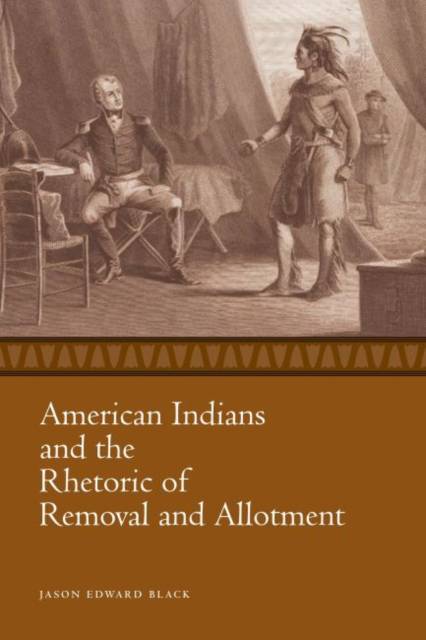
American Indians and the Rhetoric of Removal and Allotment
Jason Edward Black
€ 186,95
+ 373 punten
Uitvoering
Omschrijving
Jason Black examines the ways the U.S. government's rhetoric and American Indian voices contributed to the policies of Native-U.S. relations throughout the nineteenth century's removal and allotment eras. Black shows how these discourses co-constructed the perception of the U.S. government and American Indian communities and contributed to the relationship. Such interactions - though certainly not equal between the two - illustrated the hybrid nature of Native-U.S. rhetoric in the nineteenth century. That is, both governmental colonizing discourse and indigenous decolonizing discourse added arguments, identity constructions, and rhetorical moves to the colonizing relationship. Native Dualities demonstrates how American Indians decolonized dominant rhetoric in terms of impeding the removal and allotment policies. By turning around the U.S. government's discursive frameworks and inventing their own rhetorical tactics, American Indian communities helped restyle their own and the government's identities. During the first third of the twentieth century, Native decolonization impacted the Native-U.S. relationship as American Indians urged for the successful passage of the Indian Citizenship Act of 1924 and the Indian New Deal of 1934. In the end, Native communities were granted increased rhetorical power through decolonization, though the U.S. government retained a powerful colonial influence through its territorial management of Natives. The Indian Citizenship Act and the Indian New Deal - where this book concludes - emblemize the prevalence of the identity duality of U.S. citizenship that amalgamated American Indians to the nation, yet segregated them on reservations outside the spaces of U.S. society. This duality of inclusion and exclusion was built incrementally and existed as residues of nineteenth century Native-U.S. rhetorical relations.
Specificaties
Betrokkenen
- Auteur(s):
- Uitgeverij:
Inhoud
- Aantal bladzijden:
- 214
- Taal:
- Engels
- Reeks:
Eigenschappen
- Productcode (EAN):
- 9781628461961
- Verschijningsdatum:
- 13/01/2015
- Uitvoering:
- Hardcover
- Formaat:
- Genaaid
- Afmetingen:
- 152 mm x 229 mm
- Gewicht:
- 503 g


Alleen bij Standaard Boekhandel
+ 373 punten op je klantenkaart van Standaard Boekhandel
CADEAU


Beoordelingen
We publiceren alleen reviews die voldoen aan de voorwaarden voor reviews. Bekijk onze voorwaarden voor reviews.