



Bedankt voor het vertrouwen het afgelopen jaar! Om jou te bedanken bieden we GRATIS verzending (in België) aan op alles gedurende de hele maand januari.
- Afhalen na 1 uur in een winkel met voorraad
- In januari gratis thuislevering in België
- Ruim aanbod met 7 miljoen producten
Bedankt voor het vertrouwen het afgelopen jaar! Om jou te bedanken bieden we GRATIS verzending (in België) aan op alles gedurende de hele maand januari.
- Afhalen na 1 uur in een winkel met voorraad
- In januari gratis thuislevering in België
- Ruim aanbod met 7 miljoen producten





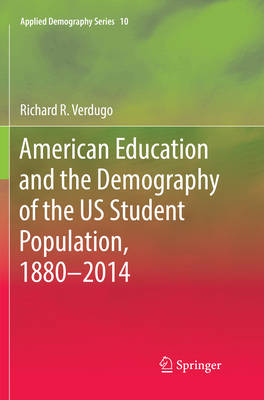
American Education and the Demography of the US Student Population, 1880 - 2014
Richard R. Verdugo
€ 97,95
+ 195 punten
Omschrijving
This monograph examines changes in the American public school population from 1900 to 2010. It shows how different historical periods have affected the composition of the student body and have posed important challenges to those involved in shaping educational policy. The author first develops an analytical framework that merges education and applied demography concepts. The education concepts include attendance, promotion, retention, high school graduation, and college enrollment. While, the applied demography concepts take into account size, distribution, and composition. He then applies this framework to the four most recent American historical periods: the Progressive Era, the Great Depression, the Post WWII Era, and the Post 1983 Era. Readers will come to understand the changing socio-demographic profile of American schools due to such factors as immigration from Europe, child labor laws, internal migration, greater fertility and the rise of the Baby Boom generation, the changing status of women and minorities, the urban crises, rising social inequality, the 2008 recession, and globalization. Featuring both historical and current data, this volume clearly shows how demographic change affects the teaching and learning environment, education policy, funding, and school segregation. Overall, it offers insightful analysis that may help shape the future of American education.
Specificaties
Betrokkenen
- Auteur(s):
- Uitgeverij:
Inhoud
- Aantal bladzijden:
- 505
- Taal:
- Engels
- Reeks:
- Reeksnummer:
- nr. 10
Eigenschappen
- Productcode (EAN):
- 9783030077679
- Verschijningsdatum:
- 14/12/2018
- Uitvoering:
- Paperback
- Afmetingen:
- 155 mm x 30 mm
- Gewicht:
- 866 g


Alleen bij Standaard Boekhandel
+ 195 punten op je klantenkaart van Standaard Boekhandel
SOLDEN


Beoordelingen
We publiceren alleen reviews die voldoen aan de voorwaarden voor reviews. Bekijk onze voorwaarden voor reviews.