


- Afhalen na 1 uur in een winkel met voorraad
- Gratis thuislevering in België vanaf € 30
- Ruim aanbod met 7 miljoen producten
- Afhalen na 1 uur in een winkel met voorraad
- Gratis thuislevering in België vanaf € 30
- Ruim aanbod met 7 miljoen producten





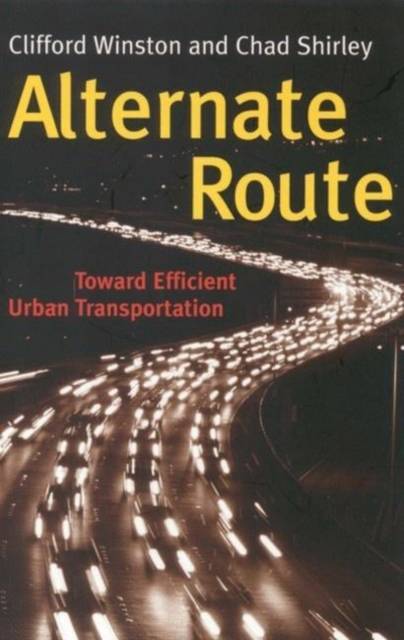
Alternate Route
Toward Efficient Urban Transportation
Clifford Winston, Chad Shirley
Paperback | Engels
€ 44,45
+ 88 punten
Omschrijving
Urban transportation problems abound across America, including jammed highways during rush-hours, deteriorating bus service, and strong pressures to build new rail systems. Most solutions attempt either to increase transportation capacity (by building more roads and expanding mass transit) or to manage existing capacity (through HOV restrictions, exclusive bus lanes, and employer-based policies such as flexible work hours). This book develops an alternative solution to urban transportation problems based on economic analysis, but well aware of the political constraints on policymakers. The authors estimate that efficient pricing and service policies could save more than $10 billion in annual net benefits over current practices, but argue that powerful, entrenched political and institutional forces will continue to thwart efficient economic solutions to improve urban transportation. They believe, however, that some form of privatization would likely improve social welfare more than an efficient public sector system. Facing fewer operating restrictions, greater economic incentives, and stronger competitive pressures, private suppliers could substantially improve the efficiency of urban operations and offer services that are more responsive to the needs of all types of travelers. The authors conclude that policymakers have bestowed huge benefits on the public by allowing the private sector to play a leading and unencumbered role in the provision of intercity transportation. Public officials should take the next step and allow the private sector to play a leading role in the provision of urban transportation.
Specificaties
Betrokkenen
- Auteur(s):
- Uitgeverij:
Inhoud
- Aantal bladzijden:
- 138
- Taal:
- Engels
Eigenschappen
- Productcode (EAN):
- 9780815793816
- Verschijningsdatum:
- 1/09/1998
- Uitvoering:
- Paperback
- Formaat:
- Trade paperback (VS)
- Afmetingen:
- 153 mm x 230 mm
- Gewicht:
- 213 g


Alleen bij Standaard Boekhandel
+ 88 punten op je klantenkaart van Standaard Boekhandel
Cadeau

AANGERADEN


Beoordelingen
We publiceren alleen reviews die voldoen aan de voorwaarden voor reviews. Bekijk onze voorwaarden voor reviews.