


- Afhalen na 1 uur in een winkel met voorraad
- Gratis thuislevering in België vanaf € 30
- Ruim aanbod met 7 miljoen producten
- Afhalen na 1 uur in een winkel met voorraad
- Gratis thuislevering in België vanaf € 30
- Ruim aanbod met 7 miljoen producten





€ 87,95
+ 175 punten
Omschrijving
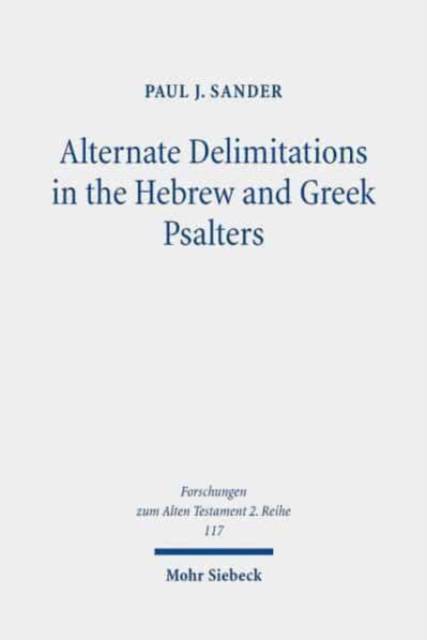
In this study, Paul J. Sander examines the phenomenon of alternate psalm delimitation in the Hebrew and Greek psalters (Psalms 9, 10, 114, 115, 116, and 147 in the Hebrew and Psalms 9, 113, 114, 115, 146, and 147 in the Greek). The main goal of his analysis is to determine the literary, theological, and canonical significance of these alternate psalm delimitations. The author shows that combined delimitation of the received Hebrew text of Psalms 9-10 and 114-115 creates interpretative possibilities that are not present without the combined interplay of the respective psalms. Similarly, the separate delimitation of the received Hebrew text of Psalms 116 and 147 creates other interpretative possibilities based upon linkages with adjacent psalms and an increased focus on the specific themes in the separately delimited psalms. The Greek lexical differences have literary and theological effects that correlate to varying degrees with the alternate Greek delimitations and open up new interpretative possibilities for the respective texts.
Specificaties
Betrokkenen
- Auteur(s):
- Uitgeverij:
Inhoud
- Aantal bladzijden:
- 290
- Taal:
- Engels
- Reeks:
- Reeksnummer:
- nr. 117
Eigenschappen
- Productcode (EAN):
- 9783161594212
- Verschijningsdatum:
- 1/07/2020
- Uitvoering:
- Paperback
- Formaat:
- Trade paperback (VS)
- Afmetingen:
- 155 mm x 231 mm
- Gewicht:
- 408 g


Alleen bij Standaard Boekhandel
+ 175 punten op je klantenkaart van Standaard Boekhandel
Cadeau

AANGERADEN


Beoordelingen
We publiceren alleen reviews die voldoen aan de voorwaarden voor reviews. Bekijk onze voorwaarden voor reviews.