


- Afhalen na 1 uur in een winkel met voorraad
- Gratis thuislevering in België vanaf € 30
- Ruim aanbod met 7 miljoen producten
- Afhalen na 1 uur in een winkel met voorraad
- Gratis thuislevering in België vanaf € 30
- Ruim aanbod met 7 miljoen producten





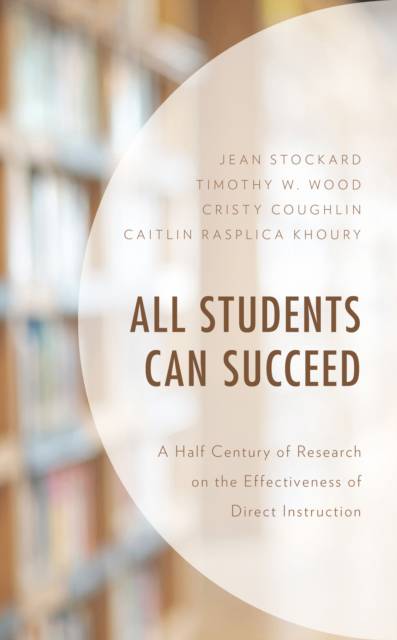
All Students Can Succeed
A Half Century of Research on the Effectiveness of Direct Instruction
Jean Stockard, Timothy W Wood, Cristy Coughlin, Caitlin Rasplica Khoury
Paperback | Engels
€ 84,95
+ 169 punten
Uitvoering
Omschrijving
Based on more than ten years of research, All Students Can Succeed presents a comprehensive review of research related to Direct Instruction (DI), a highly structured method of teaching based on the assumption that all students can learn if given appropriate instruction. The authors identify over 500 research reports published over the last 50 years and encompassing almost 4,000 effect sizes, no doubt the largest meta-analysis of any single method of instruction ever published. Extensive statistical analyses show that estimates of DI's effectiveness are consistent over time, with different research approaches, across different school environments, students from all types of backgrounds, different comparative programs, and both academic achievement and non-academic outcomes including student self-confidence. Effects are substantially stronger than those reported for other curricula. When students have DI for more time and when teachers implement the programs as designed, the effects are even stronger. Results indicate that DI has the potential to dramatically change patterns of student achievement in the United States. In an even-handed style accessible to policy makers, educators, and parents, the authors describe the theory underlying DI, its development, use, and history; systematically examine criticisms; and discuss policy implications. Extensive appendices provide detailed information for researchers.
Specificaties
Betrokkenen
- Auteur(s):
- Uitgeverij:
Inhoud
- Aantal bladzijden:
- 310
- Taal:
- Engels
Eigenschappen
- Productcode (EAN):
- 9781498588485
- Verschijningsdatum:
- 21/12/2021
- Uitvoering:
- Paperback
- Formaat:
- Trade paperback (VS)
- Afmetingen:
- 152 mm x 229 mm
- Gewicht:
- 417 g


Alleen bij Standaard Boekhandel
+ 169 punten op je klantenkaart van Standaard Boekhandel
Cadeau

AANGERADEN


Beoordelingen
We publiceren alleen reviews die voldoen aan de voorwaarden voor reviews. Bekijk onze voorwaarden voor reviews.