


- Afhalen na 1 uur in een winkel met voorraad
- Gratis thuislevering in België vanaf € 30
- Ruim aanbod met 7 miljoen producten
- Afhalen na 1 uur in een winkel met voorraad
- Gratis thuislevering in België vanaf € 30
- Ruim aanbod met 7 miljoen producten





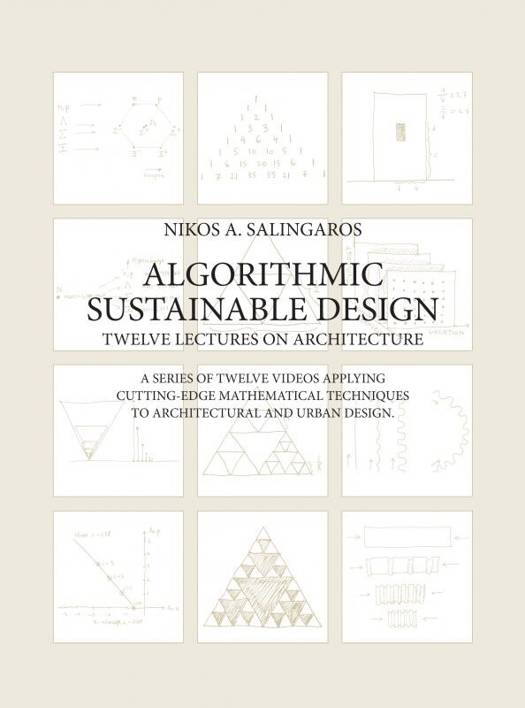
Algorithmic Sustainable Design: Twelve Lectures on Architecture
Nikos A. Salingaros
Paperback | Engels
€ 19,95
+ 39 punten
Omschrijving
Twelve one-hour video lectures are archived online, and can be accessed for free. These lectures apply cutting-edge mathematical techniques to architectural and urban design. The course material is original, and includes innovative topics such as algorithms, fractals, cellular automata, complexity, emergence, information theory, symmetries, scaling, codes, and networks, here introduced into architecture and urbanism for the first time. Students from around the world can now learn the intelligent basis for architecture, and use it to re-establish adaptability and genuine sustainability.
Twelve Lectures on Architecture is a profound philosophical work presented as a set of architectural lecture notes. It reads very easily, explaining why certain buildings and places speak to our hearts, thus illuminating many of our old assumptions about taste. It includes an excellent introduction to Christopher Alexander’s recent and remarkable work on how biology and architecture intersect in humankind’s unconscious perceptions. This book has the importance to change the world because it goes into things that people should have thought about but haven’t.
Twelve Lectures on Architecture is a profound philosophical work presented as a set of architectural lecture notes. It reads very easily, explaining why certain buildings and places speak to our hearts, thus illuminating many of our old assumptions about taste. It includes an excellent introduction to Christopher Alexander’s recent and remarkable work on how biology and architecture intersect in humankind’s unconscious perceptions. This book has the importance to change the world because it goes into things that people should have thought about but haven’t.
Specificaties
Betrokkenen
- Auteur(s):
- Uitgeverij:
Inhoud
- Aantal bladzijden:
- 254
- Taal:
- Engels
Eigenschappen
- Productcode (EAN):
- 9789403620329
- Verschijningsdatum:
- 16/03/2021
- Uitvoering:
- Paperback
- Afmetingen:
- 193 mm x 260 mm
- Gewicht:
- 537 g


Alleen bij Standaard Boekhandel
+ 39 punten op je klantenkaart van Standaard Boekhandel
Cadeau

AANGERADEN


Beoordelingen
We publiceren alleen reviews die voldoen aan de voorwaarden voor reviews. Bekijk onze voorwaarden voor reviews.