


- Afhalen na 1 uur in een winkel met voorraad
- Gratis thuislevering in België vanaf € 30
- Ruim aanbod met 7 miljoen producten
- Afhalen na 1 uur in een winkel met voorraad
- Gratis thuislevering in België vanaf € 30
- Ruim aanbod met 7 miljoen producten





Omschrijving
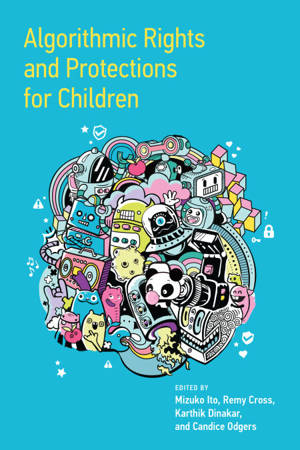
Essays on the challenges and risks of designing algorithms and platforms for children, with an emphasis on algorithmic justice, learning, and equity.
One in three Internet users worldwide is a child, and what children see and experience online is increasingly shaped by algorithms. Though children’s rights and protections are at the center of debates on digital privacy, safety, and Internet governance, the dominant online platforms have not been constructed with the needs and interests of children in mind. The editors of this volume, Mizuko Ito, Remy Cross, Karthik Dinakar, and Candice Odgers, focus on understanding diverse children’s evolving relationships with algorithms, digital data, and platforms and offer guidance on how stakeholders can shape these relationships in ways that support children’s agency and protect them from harm.
This book includes essays reporting original research on educational programs in AI relational robots and Scratch programming, on children’s views on digital privacy and artificial intelligence, and on discourses around educational technologies. Shorter opinion pieces add the perspectives of an instructional designer, a social worker, and parents. The contributing social, behavioral, and computer scientists represent perspectives and contexts that span education, commercial tech platforms, and home settings. They analyze problems and offer solutions that elevate the voices and agency of parents and children. Their essays also build on recent research examining how social media, digital games, and learning technologies reflect and reinforce unequal childhoods.
Contributors:
Paulo Blikstein, Izidoro Blikstein, Marion Boulicault, Cynthia Breazeal, Michelle Ciccone, Sayamindu Dasgupta, Devin Dillon, Stefania Druga, Jacqueline M. Kory-Westlund, Aviv Y. Landau, Benjamin Mako Hill, Adriana Manago, Siva Mathiyazhagan, Maureen Mauk, Stephanie Nguyen, W. Ian O’Byrne, Kathleen A. Paciga, Milo Phillips-Brown, Michael Preston, Stephanie M. Reich, Nicholas D. Santer, Allison Stark, Elizabeth Stevens, Kristen Turner, Desmond Upton Patton, Veena Vasudevan, Jason Yip
One in three Internet users worldwide is a child, and what children see and experience online is increasingly shaped by algorithms. Though children’s rights and protections are at the center of debates on digital privacy, safety, and Internet governance, the dominant online platforms have not been constructed with the needs and interests of children in mind. The editors of this volume, Mizuko Ito, Remy Cross, Karthik Dinakar, and Candice Odgers, focus on understanding diverse children’s evolving relationships with algorithms, digital data, and platforms and offer guidance on how stakeholders can shape these relationships in ways that support children’s agency and protect them from harm.
This book includes essays reporting original research on educational programs in AI relational robots and Scratch programming, on children’s views on digital privacy and artificial intelligence, and on discourses around educational technologies. Shorter opinion pieces add the perspectives of an instructional designer, a social worker, and parents. The contributing social, behavioral, and computer scientists represent perspectives and contexts that span education, commercial tech platforms, and home settings. They analyze problems and offer solutions that elevate the voices and agency of parents and children. Their essays also build on recent research examining how social media, digital games, and learning technologies reflect and reinforce unequal childhoods.
Contributors:
Paulo Blikstein, Izidoro Blikstein, Marion Boulicault, Cynthia Breazeal, Michelle Ciccone, Sayamindu Dasgupta, Devin Dillon, Stefania Druga, Jacqueline M. Kory-Westlund, Aviv Y. Landau, Benjamin Mako Hill, Adriana Manago, Siva Mathiyazhagan, Maureen Mauk, Stephanie Nguyen, W. Ian O’Byrne, Kathleen A. Paciga, Milo Phillips-Brown, Michael Preston, Stephanie M. Reich, Nicholas D. Santer, Allison Stark, Elizabeth Stevens, Kristen Turner, Desmond Upton Patton, Veena Vasudevan, Jason Yip
Specificaties
Betrokkenen
- Uitgeverij:
Inhoud
- Aantal bladzijden:
- 292
- Taal:
- Engels
Eigenschappen
- Productcode (EAN):
- 9780262374323
- Verschijningsdatum:
- 26/06/2023
- Uitvoering:
- E-book
- Beveiligd met:
- Adobe DRM
- Formaat:
- ePub

Alleen bij Standaard Boekhandel
+ 44 punten op je klantenkaart van Standaard Boekhandel

Beoordelingen
We publiceren alleen reviews die voldoen aan de voorwaarden voor reviews. Bekijk onze voorwaarden voor reviews.