


- Afhalen na 1 uur in een winkel met voorraad
- Gratis thuislevering in België vanaf € 30
- Ruim aanbod met 7 miljoen producten
- Afhalen na 1 uur in een winkel met voorraad
- Gratis thuislevering in België vanaf € 30
- Ruim aanbod met 7 miljoen producten





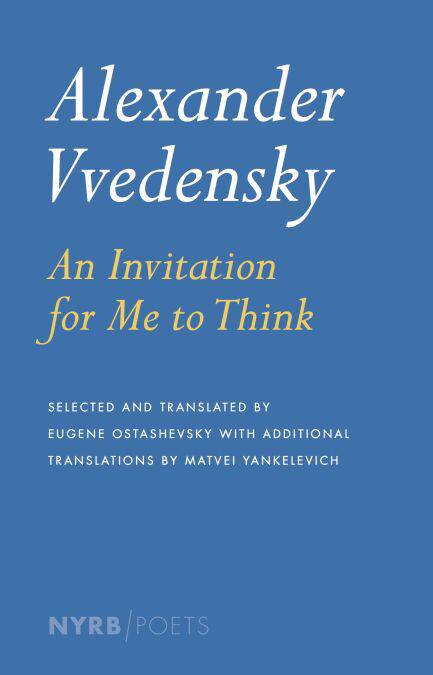
Alexander Vvedensky: An Invitation for Me to Think E-BOOK
Alexander Vvedensky
€ 14,73
+ 14 punten
Uitvoering
Omschrijving
“Pussy Riot are Vvedensky's disciples and his heirs.
Katya, Masha, and I are in jail but I don’t consider that we’ve been defeated.... According to the official report, Alexander Vvedensky died on December 20, 1941. We don’t know the cause, whether it was dysentery in the train after his arrest or a bullet from a guard. It was somewhere on the railway line between Voronezh and Kazan. His principle of ‘bad rhythm’ is our own. He wrote: ‘It happens that two rhythms will come into your head, a good one and a bad one and I choose the bad one. It will be the right one.’ ... It is believed that the OBERIU dissidents are dead, but they live on. They are persecuted but they do not die.”
— Pussy Riot [Nadezhda Tolokonnikova’s closing statement at their
trial in August 2012]
“I raise[d] my hand against concepts,” wrote Alexander Vvedensky, “I enacted a poetic critique of reason.” This weirdly and wonderfully philosophical poet was born in 1904, grew up in the midst of war and revolution, and reached his artistic maturity as Stalin was twisting the meaning of words in grotesque and lethal ways. Vvedensky—with Daniil Kharms the major figure in the short-lived underground avant-garde group OBERIU (a neologism for “the union for real art”)—responded with a poetry that explodes stable meaning into shimmering streams of provocation and invention. A Vvedensky poem is like a crazy party full of theater, film, magic tricks, jugglery, and feasting. Curious characters appear and disappear, euphoria keeps company with despair, outrageous assertions lead to epic shouting matches, and perhaps it all breaks off with one lonely person singing a song.
A Vvedensky poem doesn’t make a statement. It is an event. Vvedensky’s poetry was unpublishable during his lifetime—he made a living as a writer for children before dying under arrest in 1942—and he remains the least known of the great twentieth-century Russian poets. This is his first book to appear in English. The translations by Eugene Ostashevsky and Matvei Yankelevich, outstanding poets in their own right, are as astonishingly alert and alive as the originals.
Katya, Masha, and I are in jail but I don’t consider that we’ve been defeated.... According to the official report, Alexander Vvedensky died on December 20, 1941. We don’t know the cause, whether it was dysentery in the train after his arrest or a bullet from a guard. It was somewhere on the railway line between Voronezh and Kazan. His principle of ‘bad rhythm’ is our own. He wrote: ‘It happens that two rhythms will come into your head, a good one and a bad one and I choose the bad one. It will be the right one.’ ... It is believed that the OBERIU dissidents are dead, but they live on. They are persecuted but they do not die.”
— Pussy Riot [Nadezhda Tolokonnikova’s closing statement at their
trial in August 2012]
“I raise[d] my hand against concepts,” wrote Alexander Vvedensky, “I enacted a poetic critique of reason.” This weirdly and wonderfully philosophical poet was born in 1904, grew up in the midst of war and revolution, and reached his artistic maturity as Stalin was twisting the meaning of words in grotesque and lethal ways. Vvedensky—with Daniil Kharms the major figure in the short-lived underground avant-garde group OBERIU (a neologism for “the union for real art”)—responded with a poetry that explodes stable meaning into shimmering streams of provocation and invention. A Vvedensky poem is like a crazy party full of theater, film, magic tricks, jugglery, and feasting. Curious characters appear and disappear, euphoria keeps company with despair, outrageous assertions lead to epic shouting matches, and perhaps it all breaks off with one lonely person singing a song.
A Vvedensky poem doesn’t make a statement. It is an event. Vvedensky’s poetry was unpublishable during his lifetime—he made a living as a writer for children before dying under arrest in 1942—and he remains the least known of the great twentieth-century Russian poets. This is his first book to appear in English. The translations by Eugene Ostashevsky and Matvei Yankelevich, outstanding poets in their own right, are as astonishingly alert and alive as the originals.
Specificaties
Betrokkenen
- Auteur(s):
- Vertaler(s):
- Uitgeverij:
Inhoud
- Aantal bladzijden:
- 128
- Taal:
- Engels
- Reeks:
Eigenschappen
- Productcode (EAN):
- 9781590176450
- Verschijningsdatum:
- 1/04/2013
- Uitvoering:
- E-book
- Beveiligd met:
- Adobe DRM
- Formaat:
- ePub


Alleen bij Standaard Boekhandel
+ 14 punten op je klantenkaart van Standaard Boekhandel
Cadeau

AANGERADEN


Beoordelingen
We publiceren alleen reviews die voldoen aan de voorwaarden voor reviews. Bekijk onze voorwaarden voor reviews.