


- Afhalen na 1 uur in een winkel met voorraad
- Gratis thuislevering in België vanaf € 30
- Ruim aanbod met 7 miljoen producten
- Afhalen na 1 uur in een winkel met voorraad
- Gratis thuislevering in België vanaf € 30
- Ruim aanbod met 7 miljoen producten





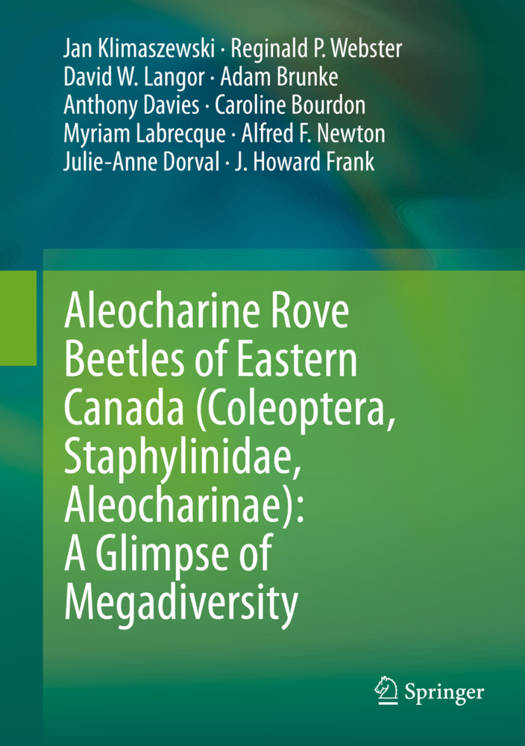
Aleocharine Rove Beetles of Eastern Canada (Coleoptera, Staphylinidae, Aleocharinae): A Glimpse of Megadiversity
Jan Klimaszewski, Reginald P. Webster, David W. Langor, Adam Brunke, Anthony Davies, Caroline Bourdon, Myriam Labrecque, Alfred F. Newton, Julie-Anne Dorval, J. Howard Frank
Hardcover | Engels
€ 400,45
+ 800 punten
Omschrijving
A first comprehensive synopsis of all aleocharine rove beetle species (Coleoptera, Staphylinidae) recorded from eastern Canada, from Ontario to the Maritime Provinces inclusively, is presented. Four hundred and seven species in 96 genera, and 16 tribes are presented and discussed.Tribes and subtribes are arranged in presumably phylogenetic order as it is currently recognized. Genera and subgenera are listed alphabetically. Species are listed alphabetically or in species groups to better reflect their relationships. Species distribution is listed by abbreviated provinces and territories in Canada and abbreviated states in the United States. Geographic status is given to every species as Native, Holarctic or adventive with some species listed with undetermined status - adventive or Holarctic. Every treated species is presented with a diagnosis, including short description of body and description of the median lobe of aedeagus, spermatheca, and tergite and sternite VIII of both sexes. For each species a plate with colour habitus image and black and white images of genital structures is provided to aid with positive identification. Collection and habitat data (often new) are presented for each species, including data on macrohabitat, microhabitat, collecting period, and collecting methods.
Specificaties
Betrokkenen
- Auteur(s):
- Uitgeverij:
Inhoud
- Aantal bladzijden:
- 902
- Taal:
- Engels
Eigenschappen
- Productcode (EAN):
- 9783319773438
- Verschijningsdatum:
- 15/01/2019
- Uitvoering:
- Hardcover
- Afmetingen:
- 182 mm x 47 mm
- Gewicht:
- 1968 g


Alleen bij Standaard Boekhandel
+ 800 punten op je klantenkaart van Standaard Boekhandel

Beoordelingen
We publiceren alleen reviews die voldoen aan de voorwaarden voor reviews. Bekijk onze voorwaarden voor reviews.