


- Afhalen na 1 uur in een winkel met voorraad
- Gratis thuislevering in België vanaf € 30
- Ruim aanbod met 7 miljoen producten
- Afhalen na 1 uur in een winkel met voorraad
- Gratis thuislevering in België vanaf € 30
- Ruim aanbod met 7 miljoen producten





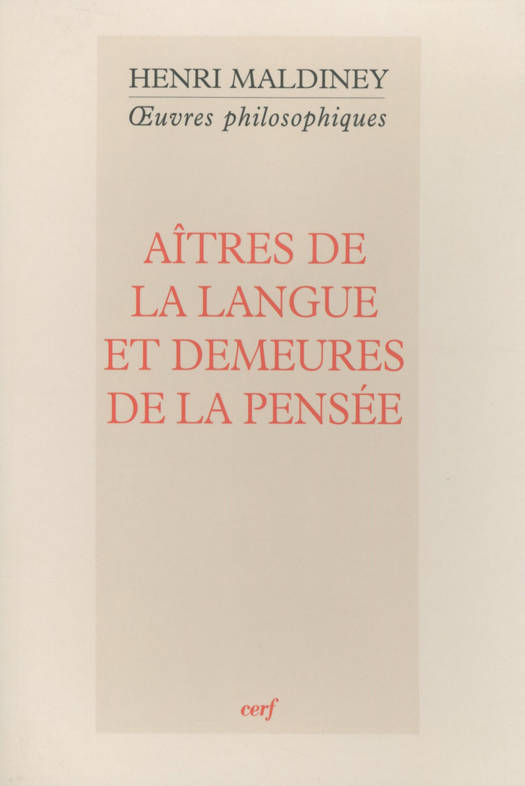
Aîtres de la langue et demeures de la pensée
Maldiney Henri
€ 40,00
+ 80 punten
Omschrijving
L'aître, nous dit le Littré, est, dans une église, « ce corps avancé qui précède le portail », ce vestibule par lequel il nous faut accéder afin d'entrer dans l'imposant édifice. Avant d'habiter la langue en laquelle nous pensons, nous faut-il en passer par ses aîtres, lesquels, s'ils ne sont eux-mêmes la demeure, nous y donnent accès. Une langue, en effet, ne se parle usuellement qu'en nous imposant son état construit, et le plus souvent, intentionnel. Or, tout l'enjeu de cet ouvrage, publié pour la première fois en 1975, consiste à méditer, en deçà de la logique de la signification établie, son état préconstruit, son moment d'ouverture par lequel elle surgit à l'état naissant, forte de cette lucidité puissancielle qui la rend inventive et proprement pensante. En méditant le rapport du verbe et du temps, l'instance du parfait dans la langue philosophique grecque ou encore la puissance comme l'impuissance du « logos » dans l'ensemble de ses acceptions, les trois études qui composent cet ouvrage ont pour vocation de nous rendre attentifs à ce qui, nourrissant toute signification, n'en relève pas encore.
--
The atrium, according to the dictionary, is, in a church, "a forecourt that precedes the great door", a vestibule through which we must pass in order to enter into the impressive edifice. Thus, before living in the language we now think in, we have to pass through atriums, which are not the edifice in themselves but give us access to it. A language cannot be spoken on an everyday basis without imposing its construction, most often intentional. This book, published for the first time in 1975, presents a challenge: it is an invitation to meditate - beyond the logic of established signification - language's pre-constructed state, the moment of its blossoming when it emerges in the nascent form, strengthened by that lucidity so rich in potential that makes it inventive and capable of thinking. By meditating on the relation between the word and time, the instance of the perfect tense in Greek philosophical language, or the power or impotence of the logos in all its accepted meanings, the three studies in this book aim to make us aware of those things that give access to meaning while remaining in the atrium.
--
The atrium, according to the dictionary, is, in a church, "a forecourt that precedes the great door", a vestibule through which we must pass in order to enter into the impressive edifice. Thus, before living in the language we now think in, we have to pass through atriums, which are not the edifice in themselves but give us access to it. A language cannot be spoken on an everyday basis without imposing its construction, most often intentional. This book, published for the first time in 1975, presents a challenge: it is an invitation to meditate - beyond the logic of established signification - language's pre-constructed state, the moment of its blossoming when it emerges in the nascent form, strengthened by that lucidity so rich in potential that makes it inventive and capable of thinking. By meditating on the relation between the word and time, the instance of the perfect tense in Greek philosophical language, or the power or impotence of the logos in all its accepted meanings, the three studies in this book aim to make us aware of those things that give access to meaning while remaining in the atrium.
Specificaties
Betrokkenen
- Auteur(s):
- Uitgeverij:
Inhoud
- Aantal bladzijden:
- 449
- Taal:
- Frans
- Reeks:
Eigenschappen
- Productcode (EAN):
- 9782204095853
- Verschijningsdatum:
- 13/09/2012
- Uitvoering:
- Paperback
- Afmetingen:
- 147 mm x 215 mm
- Gewicht:
- 606 g


Alleen bij Standaard Boekhandel
+ 80 punten op je klantenkaart van Standaard Boekhandel
Cadeau

AANGERADEN


Beoordelingen
We publiceren alleen reviews die voldoen aan de voorwaarden voor reviews. Bekijk onze voorwaarden voor reviews.