


- Afhalen na 1 uur in een winkel met voorraad
- Gratis thuislevering in België vanaf € 30
- Ruim aanbod met 7 miljoen producten
- Afhalen na 1 uur in een winkel met voorraad
- Gratis thuislevering in België vanaf € 30
- Ruim aanbod met 7 miljoen producten





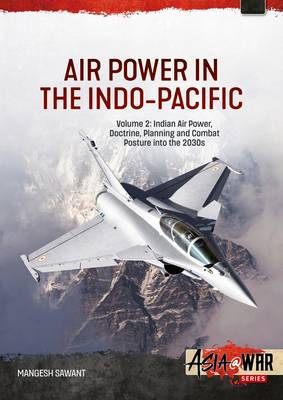
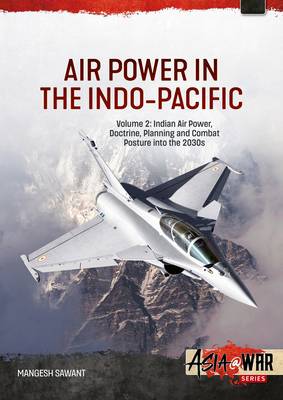
Air Power in the Indo-Pacific Volume 2
Indian Air Power, Doctrine, Planning and Combat Posture Into the 2030s
Mangesh Sawant
€ 27,95
+ 55 punten
Omschrijving
In the context of escalating Sino-Indian rivalry, Air Power in the Indo-Pacific sets out to examine how the People's Liberation Army Air Force (PLAAF) and Indian Air Force (IAF) might perform in conflict, the air power disparity between India and China, and whether the existing numerical disparity gives China a clear and incontestable advantage. Volume 2 examines the Indian Air Force's history, culture, organisational design, force structure, operational panning and combat posture and capabilities in the present day and into the near future.
As China flexes its muscles an understanding of the challenges facing the PLAAF is crucial for India and the world at large. A study of the operational capabilities of the IAF and the PLAAF has not previously received a systematic and a rigorous assessment. The literature on the operational dynamics of PLAAF and IAF during a war remains sparse and underdeveloped despite a large and growing volume of work on overall Chinese military capabilities. Understanding both the IAF's and the PLAAF's history, organisation, culture and weapons systems and their trajectory into the near future are important for assessing their capabilities for fighting wars.
Air Power in the Indo-Pacific sets out to understand the interaction between the crucial determinants of modern warfare such as technology, strategic advantage in high altitude warfare, streamlined organisation, leadership, weapons platforms, combat experience, force structures, doctrinal and operational concepts, training, geography, weather and distance to better understand the war fighting capabilities of the IAF and PLAAF.
Air Power in the Indo-Pacific brings about an understanding of India's past and present approaches to air power and provides a crucial baseline for assessing future challenges. This volume includes a history of the IAF, its culture, organisation, doctrine, logistics, basing and infrastructure, technological modernisation, ORBAT of the Western Air Command and Eastern Air Command, air bases, training at home and abroad, AWACS, EW and ELINT aircraft, air defences in Leh, Ladakh and the eastern sector, and network centric warfare.
This volume is illustrated throughout with original photographs, and specially commissioned colour artworks and maps. Air Power in the Indo-Pacific Volume 2: Indian Air Power, Doctrine, Planning and Combat Posture into the 2030s provides an invaluable source of information for the enthusiast and professional reader alike.
As China flexes its muscles an understanding of the challenges facing the PLAAF is crucial for India and the world at large. A study of the operational capabilities of the IAF and the PLAAF has not previously received a systematic and a rigorous assessment. The literature on the operational dynamics of PLAAF and IAF during a war remains sparse and underdeveloped despite a large and growing volume of work on overall Chinese military capabilities. Understanding both the IAF's and the PLAAF's history, organisation, culture and weapons systems and their trajectory into the near future are important for assessing their capabilities for fighting wars.
Air Power in the Indo-Pacific sets out to understand the interaction between the crucial determinants of modern warfare such as technology, strategic advantage in high altitude warfare, streamlined organisation, leadership, weapons platforms, combat experience, force structures, doctrinal and operational concepts, training, geography, weather and distance to better understand the war fighting capabilities of the IAF and PLAAF.
Air Power in the Indo-Pacific brings about an understanding of India's past and present approaches to air power and provides a crucial baseline for assessing future challenges. This volume includes a history of the IAF, its culture, organisation, doctrine, logistics, basing and infrastructure, technological modernisation, ORBAT of the Western Air Command and Eastern Air Command, air bases, training at home and abroad, AWACS, EW and ELINT aircraft, air defences in Leh, Ladakh and the eastern sector, and network centric warfare.
This volume is illustrated throughout with original photographs, and specially commissioned colour artworks and maps. Air Power in the Indo-Pacific Volume 2: Indian Air Power, Doctrine, Planning and Combat Posture into the 2030s provides an invaluable source of information for the enthusiast and professional reader alike.
Specificaties
Betrokkenen
- Auteur(s):
- Uitgeverij:
Inhoud
- Aantal bladzijden:
- 96
- Taal:
- Engels
- Reeks:
Eigenschappen
- Productcode (EAN):
- 9781806720347
- Verschijningsdatum:
- 15/12/2026
- Uitvoering:
- Paperback
- Formaat:
- Trade paperback (VS)
- Afmetingen:
- 211 mm x 297 mm


Alleen bij Standaard Boekhandel
+ 55 punten op je klantenkaart van Standaard Boekhandel
Cadeau

AANGERADEN


Beoordelingen
We publiceren alleen reviews die voldoen aan de voorwaarden voor reviews. Bekijk onze voorwaarden voor reviews.