


- Afhalen na 1 uur in een winkel met voorraad
- Gratis thuislevering in België vanaf € 30
- Ruim aanbod met 7 miljoen producten
- Afhalen na 1 uur in een winkel met voorraad
- Gratis thuislevering in België vanaf € 30
- Ruim aanbod met 7 miljoen producten





€ 41,95
+ 83 punten
Omschrijving
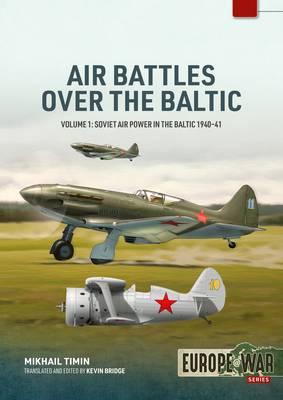
The opening volume of this major four-part study examines the Soviet Air Forces stationed in the Baltic region in the months before the German invasion of June 1941. Using Soviet and German archival sources, acclaimed aviation historian Mikhail Timin provides the most detailed account yet of how these forces were organised, trained and equipped, and the extent to which they were prepared for the challenge to come.
Following the incorporation of the Baltic States into the USSR in 1940, the Red Army established a new Baltic Special Military District, into which dozens of fighter, bomber and ground-attack regiments were deployed. Timin traces this process in depth, describing the order of battle, the movement of units into newly occupied territory, and the problems of building and maintaining airfields and logistical support. The combat training of units is examined with precision, alongside the difficult process of integrating thousands of inexperienced young pilots who often had minimal flying hours.
The volume also explores the strengths and weaknesses of the available materiel. The Soviet forces fielded a mixture of outdated and modern aircraft types, with their commanders struggling to manage shortages of spares, fuel and ammunition while also attempting to train crews for combat. The book highlights the limitations of Soviet doctrine and command structures, showing how administrative decisions and organisational upheaval undermined the combat readiness of units.
Richly supported by colour profiles, photographs, maps and tables, this volume offers a comprehensive analysis of the Baltic air alignment in 1940. It sets the essential foundation for understanding the disastrous air battles that followed on 22 June 1941, when the Luftwaffe struck and the Red Air Force struggled to respond.
Following the incorporation of the Baltic States into the USSR in 1940, the Red Army established a new Baltic Special Military District, into which dozens of fighter, bomber and ground-attack regiments were deployed. Timin traces this process in depth, describing the order of battle, the movement of units into newly occupied territory, and the problems of building and maintaining airfields and logistical support. The combat training of units is examined with precision, alongside the difficult process of integrating thousands of inexperienced young pilots who often had minimal flying hours.
The volume also explores the strengths and weaknesses of the available materiel. The Soviet forces fielded a mixture of outdated and modern aircraft types, with their commanders struggling to manage shortages of spares, fuel and ammunition while also attempting to train crews for combat. The book highlights the limitations of Soviet doctrine and command structures, showing how administrative decisions and organisational upheaval undermined the combat readiness of units.
Richly supported by colour profiles, photographs, maps and tables, this volume offers a comprehensive analysis of the Baltic air alignment in 1940. It sets the essential foundation for understanding the disastrous air battles that followed on 22 June 1941, when the Luftwaffe struck and the Red Air Force struggled to respond.
Specificaties
Betrokkenen
- Auteur(s):
- Uitgeverij:
Inhoud
- Aantal bladzijden:
- 104
- Taal:
- Engels
- Reeks:
Eigenschappen
- Productcode (EAN):
- 9781804518762
- Verschijningsdatum:
- 31/05/2026
- Uitvoering:
- Paperback
- Formaat:
- Trade paperback (VS)
- Afmetingen:
- 210 mm x 298 mm


Alleen bij Standaard Boekhandel
+ 83 punten op je klantenkaart van Standaard Boekhandel

Beoordelingen
We publiceren alleen reviews die voldoen aan de voorwaarden voor reviews. Bekijk onze voorwaarden voor reviews.