



Bedankt voor het vertrouwen het afgelopen jaar! Om jou te bedanken bieden we GRATIS verzending (in België) aan op alles gedurende de hele maand januari.
- Afhalen na 1 uur in een winkel met voorraad
- In januari gratis thuislevering in België
- Ruim aanbod met 7 miljoen producten
Bedankt voor het vertrouwen het afgelopen jaar! Om jou te bedanken bieden we GRATIS verzending (in België) aan op alles gedurende de hele maand januari.
- Afhalen na 1 uur in een winkel met voorraad
- In januari gratis thuislevering in België
- Ruim aanbod met 7 miljoen producten





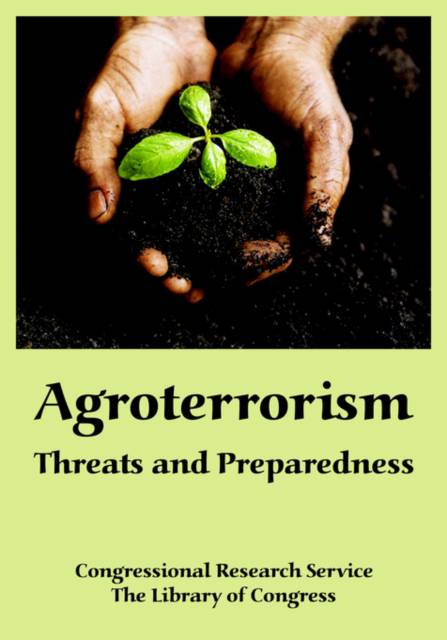
Agroterrorism
Threats and Preparedness
Congressional Research Service, The Library of Congress
Paperback | Engels
€ 33,95
+ 67 punten
Omschrijving
The potential of terrorist attacks against agricultural targets (agroterrorism) is increasingly recognized as a national security threat, especially after the events of September 11, 2001. Agroterrorism is a subset of bioterrorism, and is defined as the deliberate introduction of an animal or plant disease with the goal of generating fear, causing economic losses, and/or undermining stability. Attacks against agriculture are not new, and have been conducted or considered by both nation-states and substate organizations throughout history. The results of an agroterrorist attack may include major economic crises in the agricultural and food industries, loss of confidence in government, and possibly human casualties. Humans could be at risk in terms of food safety or public health, especially if the chosen disease is transmissible to humans (zoonotic). Public opinion may be particularly sensitive to a deliberate outbreak of disease affecting the food supply. Public confidence in government could be eroded if authorities appear unable to prevent such an attack or to protect the population's food supply. Agriculture has several characteristics that pose unique problems for managing the threat. Agricultural production is geographically disbursed in unsecured environments. Livestock are frequently concentrated in confined locations, and then transported and commingled with other herds. Pest and disease outbreaks can quickly halt economically important exports. Many veterinarians lack experience with foreign animal diseases that are resilient and endemic in foreign countries.
Specificaties
Betrokkenen
- Auteur(s):
- Uitgeverij:
Inhoud
- Aantal bladzijden:
- 56
- Taal:
- Engels
Eigenschappen
- Productcode (EAN):
- 9781410219114
- Verschijningsdatum:
- 25/04/2005
- Uitvoering:
- Paperback
- Formaat:
- Trade paperback (VS)
- Afmetingen:
- 178 mm x 254 mm
- Gewicht:
- 113 g


Alleen bij Standaard Boekhandel
+ 67 punten op je klantenkaart van Standaard Boekhandel
SOLDEN


Beoordelingen
We publiceren alleen reviews die voldoen aan de voorwaarden voor reviews. Bekijk onze voorwaarden voor reviews.