


- Afhalen na 1 uur in een winkel met voorraad
- Gratis thuislevering in België vanaf € 30
- Ruim aanbod met 7 miljoen producten
- Afhalen na 1 uur in een winkel met voorraad
- Gratis thuislevering in België vanaf € 30
- Ruim aanbod met 7 miljoen producten





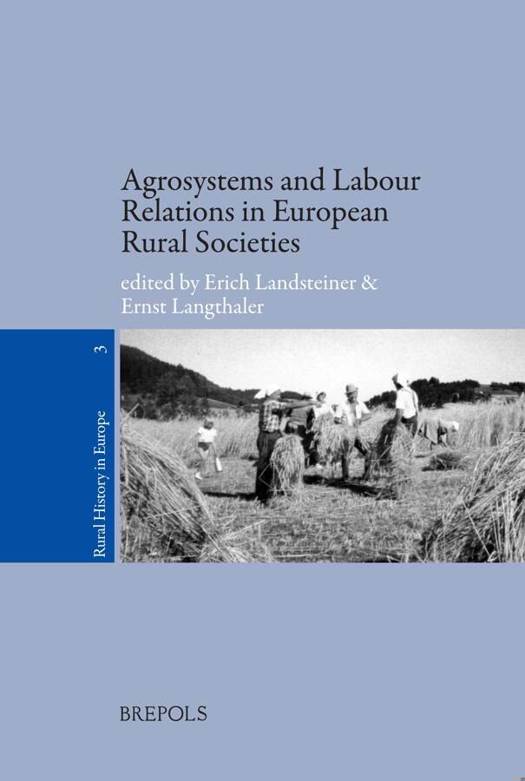
Agrosystems and Labour Relations in European Rural Societies
(Middle Ages-Twentieth Century)
Erich Landsteiner
€ 58,30
+ 116 punten
Omschrijving
It goes without saying that agriculture is a form of colonisation of nature by society. In the course of history the articulation of natural and societal features gave rise to a wide variety of agrosystems within the boundaries of Europe which were embedded in supra-regional political and economic contexts at least from the High Middle Ages onwards. By following an integrative approach, this volume defines agrosystems as production systems based on the ecological and socioeconomic relations involved in the reproduction of rural societies at multiple levels. The authors explore the articulation of natural and societal factors through the prism of labour relations. The structural and practical organization of labour is seen as the crucial link between rural production and reproduction. Accordingly, the contributions focus on the rural household as the basic unit of production and reproduction in different temporal and spatial contexts. Therefore, the question arises if the changes in ecosystems and social systems have so fundamentally altered European agriculture up to now that peasant family farming will disappear (if it is no longer sustained by state intervention).
Specificaties
Betrokkenen
- Auteur(s):
- Uitgeverij:
Inhoud
- Aantal bladzijden:
- 218
- Taal:
- Engels
- Reeks:
- Reeksnummer:
- nr. 3
Eigenschappen
- Productcode (EAN):
- 9782503529547
- Verschijningsdatum:
- 30/11/2010
- Uitvoering:
- Paperback
- Formaat:
- Trade paperback (VS)
- Afmetingen:
- 157 mm x 234 mm
- Gewicht:
- 385 g


Alleen bij Standaard Boekhandel
+ 116 punten op je klantenkaart van Standaard Boekhandel
Cadeau

AANGERADEN


Beoordelingen
We publiceren alleen reviews die voldoen aan de voorwaarden voor reviews. Bekijk onze voorwaarden voor reviews.