


- Afhalen na 1 uur in een winkel met voorraad
- Gratis thuislevering in België vanaf € 30
- Ruim aanbod met 7 miljoen producten
- Afhalen na 1 uur in een winkel met voorraad
- Gratis thuislevering in België vanaf € 30
- Ruim aanbod met 7 miljoen producten





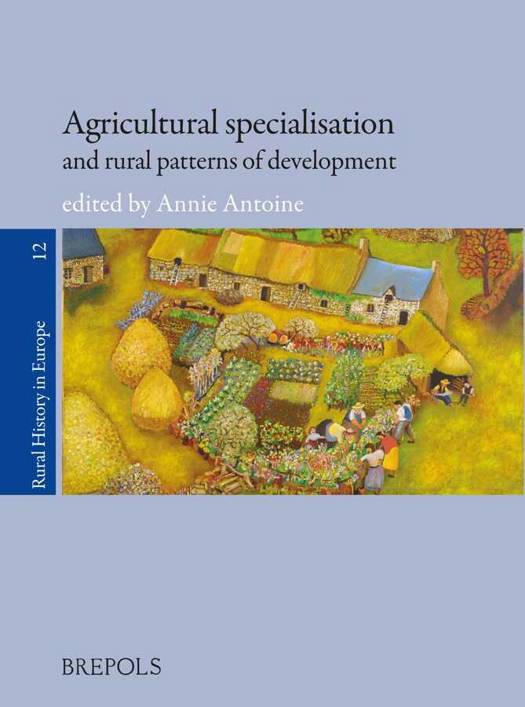
Agricultural specialisation and rural patterns of development
Annie Antoine
€ 79,50
+ 159 punten
Omschrijving
In agricultural history, specialisation is usually considered as progress, turning peasants into market-orientated farmers and allowing them to escape from self-sufficiency. Recent developments in the field of productivist agriculture and the recent rise of alternative agriculture cast doubt on this conventional concept of agricultural specialisation. Several questions arise: Did specialisation necessarily mean that farms concentrated on a single product? Was it always a great step forward? Did it occur in the same form in earlier centuries as in contemporary economies? The chapters of this book draw attention to several factors relevant to processes of specialisation, such as markets, transport, and the natural environment. The contributions deal with regions in 10 countries of Europe, from Sweden to Spain and from England to Bulgaria, and with periods between the seventeenth and the twentieth centuries. They suggest several conclusions. Specialisation can take place in various forms, ranging from focussing on a single major cash crop to giving preference to a combination of products. This is true both at the level of an individual farm as at a regional level. Specialisation did not always improve the farmers' standard of living. And it was neither a linear nor an irreversible process. This can be observed in periods of war, but also in recent developments in post-communist countries.
Specificaties
Betrokkenen
- Auteur(s):
- Uitgeverij:
Inhoud
- Aantal bladzijden:
- 304
- Taal:
- Engels
- Reeks:
- Reeksnummer:
- nr. 12
Eigenschappen
- Productcode (EAN):
- 9782503532288
- Verschijningsdatum:
- 30/12/2011
- Uitvoering:
- Paperback
- Formaat:
- Trade paperback (VS)
- Afmetingen:
- 156 mm x 234 mm
- Gewicht:
- 430 g


Alleen bij Standaard Boekhandel
+ 159 punten op je klantenkaart van Standaard Boekhandel
Cadeau

AANGERADEN


Beoordelingen
We publiceren alleen reviews die voldoen aan de voorwaarden voor reviews. Bekijk onze voorwaarden voor reviews.