


- Afhalen na 1 uur in een winkel met voorraad
- Gratis thuislevering in België vanaf € 30
- Ruim aanbod met 7 miljoen producten
- Afhalen na 1 uur in een winkel met voorraad
- Gratis thuislevering in België vanaf € 30
- Ruim aanbod met 7 miljoen producten





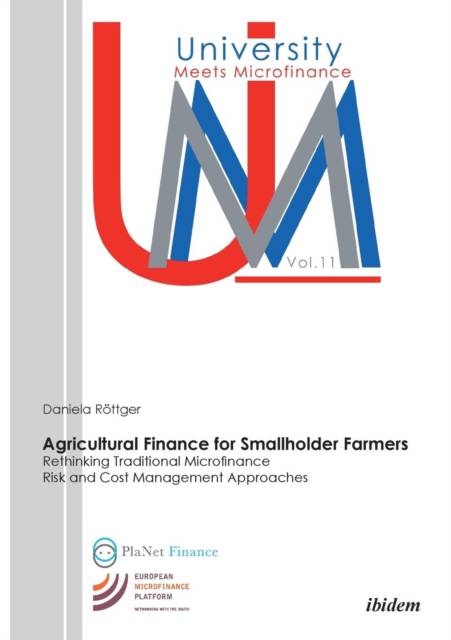
Agricultural Finance for Smallholder Farmers
Rethinking Traditional Microfinance Risk and Cost Management Approaches
Daniela Röttger
€ 21,45
+ 42 punten
Omschrijving
Even though traditional microfinance has successfully paved the way for offering financial services to low-income populations without traditional collateral, many microfinance institutions (MFIs) are still reluctant to move into rural areas and agricultural finance, due to the perceived high risks and costs. Daniela Röttger`s research demonstrates how MFIs can mitigate risks and costs of lending to smallholder farmers by using a combination of proven traditional microfinance mechanisms while adapting specific loan features and lending mechanisms to the particularities of smallholder agriculture. She systematically compares traditional microfinance risk management mechanisms with agricultural microfinance approaches and identifies successful strategies. For this purpose, eight MFIs providing agricultural finance to smallholder farmers in four countries in East and West Africa (Uganda, Kenya, Benin, Cameroon) were interviewed and their loan features and agricultural lending mechanism were analyzed. The study shows that MFIs can successfully serve smallholder farmers in rural areas. However, the extent of adaptations is reason enough not to commit to such an endeavor lightly. A strong commitment combined with sound in-house knowledge of agricultural value chains and the flexibility to adapt loan terms and lending procedures to the particularities of agriculture are needed to successfully develop and sustain agricultural microfinance.
Specificaties
Betrokkenen
- Auteur(s):
- Uitgeverij:
Inhoud
- Aantal bladzijden:
- 152
- Taal:
- Engels
- Reeks:
- Reeksnummer:
- nr. 11
Eigenschappen
- Productcode (EAN):
- 9783838207452
- Verschijningsdatum:
- 29/01/2015
- Uitvoering:
- Paperback
- Afmetingen:
- 150 mm x 8 mm
- Gewicht:
- 202 g


Alleen bij Standaard Boekhandel
+ 42 punten op je klantenkaart van Standaard Boekhandel
Cadeau

AANGERADEN


Beoordelingen
We publiceren alleen reviews die voldoen aan de voorwaarden voor reviews. Bekijk onze voorwaarden voor reviews.