


- Afhalen na 1 uur in een winkel met voorraad
- Gratis thuislevering in België vanaf € 30
- Ruim aanbod met 7 miljoen producten
- Afhalen na 1 uur in een winkel met voorraad
- Gratis thuislevering in België vanaf € 30
- Ruim aanbod met 7 miljoen producten





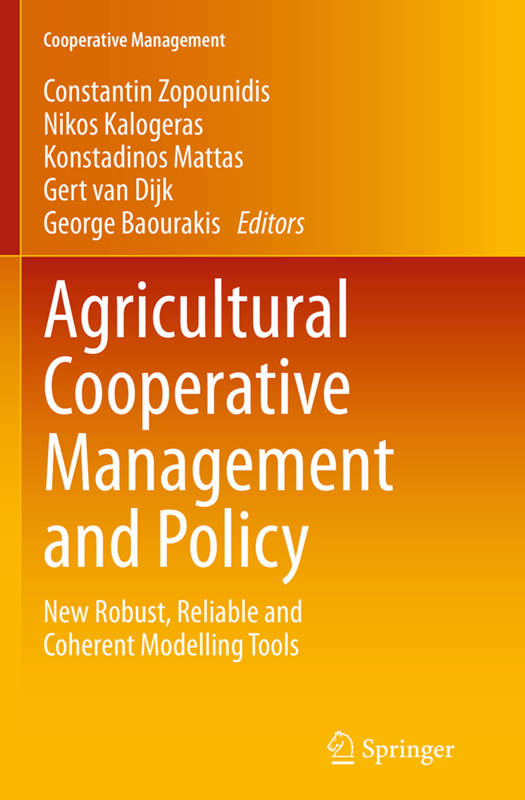
Agricultural Cooperative Management and Policy
New Robust, Reliable and Coherent Modelling Tools
€ 108,45
+ 216 punten
Omschrijving
This book focuses on the use of farm level, micro- and macro-data of cooperative systems and networks in developing new robust, reliable and coherent modeling tools for agricultural and environmental policy analysis. The efficacy of public intervention on agriculture is largely determined by the existence of reliable information on the effects of policy options and market developments on farmers' production decisions and in particular, on key issues such as levels of agricultural and non-agricultural output, land use and incomes, use of natural resources, sustainable-centric management, structural change and the viability of family farms. Over the last years, several methods and analytical tools have been developed for policy analysis using various sets of data. Such methods have been based on integrated approaches in an effort to investigate the above key issues and have thus attempted to offer a powerful environment for decision making, particularly in an era of radical change for both agriculture and the wider economy.
Specificaties
Betrokkenen
- Uitgeverij:
Inhoud
- Aantal bladzijden:
- 422
- Taal:
- Engels
- Reeks:
Eigenschappen
- Productcode (EAN):
- 9783319353692
- Verschijningsdatum:
- 3/09/2016
- Uitvoering:
- Paperback
- Formaat:
- Trade paperback (VS)
- Afmetingen:
- 156 mm x 234 mm
- Gewicht:
- 607 g

Alleen bij Standaard Boekhandel
+ 216 punten op je klantenkaart van Standaard Boekhandel
AANGERADEN


Beoordelingen
We publiceren alleen reviews die voldoen aan de voorwaarden voor reviews. Bekijk onze voorwaarden voor reviews.