


- Afhalen na 1 uur in een winkel met voorraad
- Gratis thuislevering in België vanaf € 30
- Ruim aanbod met 7 miljoen producten
- Afhalen na 1 uur in een winkel met voorraad
- Gratis thuislevering in België vanaf € 30
- Ruim aanbod met 7 miljoen producten





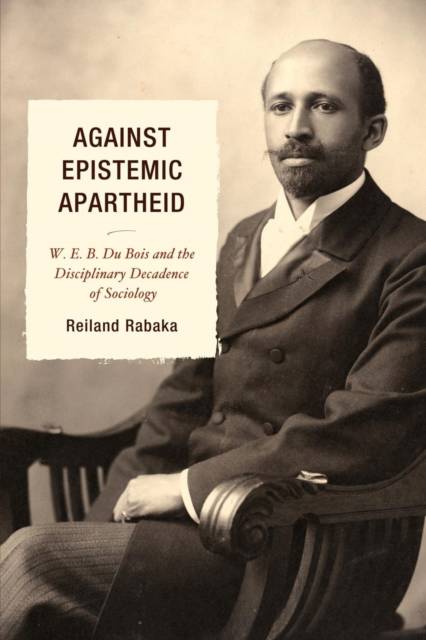
Against Epistemic Apartheid
W.E.B. Du Bois and the Disciplinary Decadence of Sociology
Reiland Rabaka
Paperback | Engels
€ 127,45
+ 254 punten
Uitvoering
Omschrijving
In this intellectual history-making volume, multiple award-winning W. E. B. Du Bois scholar Reiland Rabaka offers the first book-length treatment of Du Bois's seminal sociological discourse: from Du Bois as inventor of the sociology of race to Du Bois as the first sociologist of American religion; from Du Bois as a pioneer of urban and rural sociology to Du Bois as innovator of the sociology of gender and inaugurator of intersectional sociology; and, finally, from Du Bois as groundbreaking sociologist of education and critical criminologist to Du Bois as dialectical critic of the disciplinary decadence of sociology and the American academy. Against Epistemic Apartheid brings new and intensive archival research into critical dialogue with the watershed work of classical and contemporary, male and female, black and white, national and international sociologists and critical social theorists' Du Bois studies. Against Epistemic Apartheid offers an accessible introduction to Du Bois's major contributions to sociology and, therefore, will be of interest to scholars and students not only in sociology, but also African American studies, American studies, cultural studies, critical race studies, gender studies, and postcolonial studies, as well as scholars and students in "traditional" disciplines such as history, philosophy, political science, economics, education, and religion.
Specificaties
Betrokkenen
- Auteur(s):
- Uitgeverij:
Inhoud
- Aantal bladzijden:
- 440
- Taal:
- Engels
Eigenschappen
- Productcode (EAN):
- 9780739145982
- Verschijningsdatum:
- 10/05/2010
- Uitvoering:
- Paperback
- Formaat:
- Trade paperback (VS)
- Afmetingen:
- 152 mm x 229 mm
- Gewicht:
- 657 g



Alleen bij Standaard Boekhandel
+ 254 punten op je klantenkaart van Standaard Boekhandel
Cadeau

AANGERADEN


Beoordelingen
We publiceren alleen reviews die voldoen aan de voorwaarden voor reviews. Bekijk onze voorwaarden voor reviews.